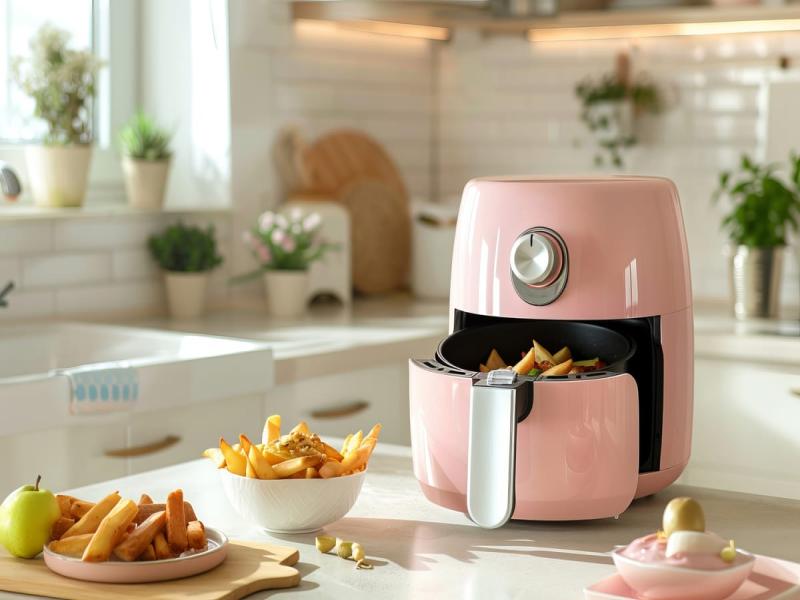
If you’ve walked into a Bangladeshi kitchen lately, you’ve likely seen a sleek, boxy gadget sitting proudly next to the blender. That’s an air fryer, essentially a compact countertop oven that uses a powerful fan to circulate hot air around your food at high speeds. This process creates a crispy, "fried" outer layer using little to no oil.
For generations, our evening tea was incomplete without deep-fried shingaras, samosas, or piyajus swimming in oil. However, as health awareness grows in Dhaka and beyond, many of us are looking for ways to enjoy these favorites without the heavy calories and "gas" problems. An air fryer is the perfect middle ground. It offers the crunch we crave while being much safer than a pan of boiling oil. Plus, in a busy household, the ability to "set it and forget it" saves precious time, while modern models are surprisingly efficient, keeping a close eye on your monthly electricity bill.
How Does an Air Fryer Work?
An air fryer blows extremely hot air around your food at high speed using a powerful fan. This process often called Rapid Air Technology mimics deep-frying and gives you a crispy outer layer with up to 90% less oil.
What is the secret behind the air fryer's crunch?
Ever wondered how air fryer food gets that satisfying crunch without a drop of oil? The answer is Rapid Air Technology and it's simpler than it sounds.
Picture a hair dryer, but far more powerful. Inside the air fryer, a heating element at the top gets extremely hot. A strong fan then blasts that heat downward, circulating it rapidly all around the food in the basket. Every side of your snack gets hit with constant, even heat, nothing gets left undercooked or soggy.
How is air frying different from traditional deep frying?
In traditional Bangladeshi cooking, we submerge shingaras, pakoras, or begunis in a kadai full of hot oil. The oil does the cooking. In an air fryer, fast-moving hot air does that same job without the grease.
That intense circulating heat quickly removes moisture from the surface of your food, creating the golden-brown crunch we all grew up craving. Because the heat works so efficiently, you only need a tiny drop of oil, sometimes none at all to get a texture that tastes nearly identical to deep-fried food.
Less fat. Less mess. No oily kadai to scrub afterward. Just the crunch you love, made smarter.
Key Factors to Consider Before Buying an Air Fryer in Bangladesh
Choosing the right air fryer in Bangladesh isn't just about picking the sleekest one on the shelf. You need something that fits your family size, suits our everyday cooking habits, and doesn't cause a shock when the electricity bill arrives. Here's what actually matters before you spend your money.
Capacity (Liters): Finding the Right Fit for Your Family
The basket size is measured in liters and getting this wrong is one of the most common mistakes buyers make. Too small, and you're cooking in multiple batches. Too large, and you're wasting electricity on empty space.
-
Small (2L–3L): Ideal for bachelors, students, or couples. Handles a single chicken breast or a plate of fries comfortably.
-
Medium (4L–5.5L): The sweet spot for most Bangladeshi families of four. Fits a small whole chicken or enough shingaras for evening snacks without multiple rounds.
-
Large (6L+): Best for big families or anyone who regularly hosts dawat guests.
Wattage & Electricity Bill: Will It Cost Too Much?
This is the question almost every Bangladeshi buyer asks first and it's a fair one.
Most air fryers run between 1200W and 1800W. That sounds high, but here's the thing: air fryers cook significantly faster than traditional ovens, so they run for less time. Using a 1500W air fryer for just 20 minutes a day consumes less than 0.5 units (kWh) of electricity which works out to only a few taka per day at current rates.
In fact, higher wattage often means better results. It heats up faster, crisps food more efficiently, and finishes the job sooner so the machine isn't running longer than it needs to.
Manual vs. Digital Controls: Which One Is Right for You?
Both types work well, the right choice depends on your household.
Manual models use simple rotary knobs for time and temperature. They're durable, easy to repair, and straightforward for elderly family members who don't want to deal with touch screens.
Digital models come with sleek panels and preset modes for chicken, fish, cake, and more. They look modern and allow precise control but touch screens can sometimes be sensitive to the heat and humidity common in Bangladeshi kitchens.
Simple rule: if you want reliability, go manual. If you want precision and style, go digital.
Basket Type: Non-Stick Quality Matters More Than You Think
The basket is where your food actually cooks and it's also the hardest part to clean after an oily cooking session.
Look for baskets with high-quality PTFE-free or ceramic non-stick coatings that won't flake off with regular use. A coating that chips into your food is a health risk, not just an inconvenience. Also check if the basket is dishwasher-safe or has a smooth finish that wipes clean easily. And one practical tip: square baskets usually offer more usable cooking space than round ones.
Warranty & After-Sales Service: Don't Overlook This
Bangladesh's voltage fluctuations are real, and they can damage electronics over time. This is why after-sales support isn't just a bonus, it's a necessity.
Local brands like Walton, Singer, and Vision have service centers spread across the country, making repairs and replacements genuinely accessible. If you're leaning toward international brands like Philips or Black & Decker, make sure you're buying from an authorized dealer like Rangs eMart , who provides a valid local warranty and genuine after-sales support. .
A great machine with no one to fix it isn't really a great deal.
Top Air Fryer Brands Available in Bangladesh: A Comparison
Walking into an electronics shop or scrolling through online stores like Rangs eMart and seeing dozens of air fryer options can feel genuinely overwhelming. Which brand is worth it? Which one will actually last? To make this easier, we've broken down the most reliable brands into three clear groups based on price and what you actually get for your money.
Premium Segment: The Gold Standard
If you want the best air fryer in Bangladesh, Philips is where most experts point first and for good reason. Philips literally invented the air fryer, and their Rapid Air Technology is still considered the most consistent for achieving that perfect golden crunch. Their machines are built to last, and they hold resale value well too.
Another premium contender worth knowing is Ninja, famous for its powerful dual-basket models. If you've ever wished you could cook chicken fries and vegetables at the same time without the smells mixing, that's exactly what Ninja's dual-basket design solves. These brands cost more upfront, but their performance, safety features, and long-term reliability justify the price for serious buyers.
Value-for-Money Segment: Smart and Reliable
This is where most Bangladeshi buyers find their sweet spot of modern features without the luxury price tag.
Xiaomi (Mi Smart Air Fryer) is a clear fan favorite here. It's sleek, minimalist, and can be controlled directly from your smartphone, a genuine plus for tech-savvy households managing a busy schedule. It's especially well-suited for small families who want a digital experience on a mid-range budget.
Black & Decker and Russell Hobbs are equally strong choices in this category. These are internationally trusted brands offering solid build quality and larger capacities like 5L or 7L models at prices more accessible than Philips. They're known for being workhorses: simple to use, effective at cooking, and easy to clean after a heavy cooking session. If your relatives in the UK or UAE swear by these brands, there's a reason and you'll find them in most good electronics shops across Dhaka and Chattogram.
Local Champions: Price and Service Advantage
If your top priorities are affordability and reliable after-sales support, local brands are hard to beat.At Rangs eMart, we’ve seen these local champions become top-sellers because they were built specifically for the Bangladeshi lifestyle
Walton, Singer, and Vision have one major advantage that imported brands simply can't match: they were built with the Bangladeshi market in mind. Service centers exist in almost every district, so if a knob breaks or a fuse blows, you're not waiting weeks for imported spare parts or shipping a machine back to Dhaka.
Prices often start below 7,000 BDT, making these the most accessible entry point into air frying. They may not have smart app controls or dual baskets, but they're reliable, easy to operate, and come with solid local warranties. For families buying their first air fryer or anyone who simply wants something that works without complication these brands deliver exactly that.
Air Fryer Price Range in Bangladesh (2026): What You Get at Every Budget
Your budget will shape everything: the size you get, the features you can use, and how long the machine is likely to last. Here's an honest, straightforward breakdown of what to expect at each current air fryer prices in Bangladesh this year.
|
Budget Segment
|
Price Range (BDT)
|
Typical Capacity
|
Key Features
|
Popular Brands
|
|
Budget
|
5,500 – 8,500
|
3L – 4.5L
|
Manual knob controls, basic heating, compact design
|
Walton, Miyako, Silver Crest
|
|
Mid-Range
|
9,000 – 15,000
|
4.1L – 6.2L
|
Digital touchscreen, LED display, one-touch presets
|
Xiaomi, Black & Decker, Philips (3000 Series)
|
|
High-End
|
16,000+
|
7L+ (XXL)
|
Dual-basket, Wi-Fi/app control, advanced sensors
|
Philips (5000 Series), Panasonic, Ninja
|
Which segment is actually right for you?
Choose Budget (5,500–8,500 BDT) if you want a no-fuss machine that simply gets the job done. If you're a student, a couple, or someone who just wants to air fry shingaras and chicken fries occasionally without overthinking it this range is perfectly enough. Local brands like Walton offer decent reliability and easy servicing across Bangladesh.
Choose Mid-Range (9,000–15,000 BDT) if you're a family of four or five looking for the best balance between smart features and everyday practicality. Digital controls, preset cooking modes, and larger baskets make daily cooking noticeably easier especially on busy weeknights when everyone's hungry and you don't have time to stand over a stove.
Choose High-End (16,000+ BDT) if you have a large family, regularly host dawat guests, or simply want the most capable machine available. Dual baskets mean you can cook chicken and vegetables simultaneously. App control means you can monitor your kababs from the other room. For serious home cooks who want precision every single time, this investment makes complete sense.
One honest tip: don't over-buy or under-buy. A 7L air fryer in a two-person household is overkill. A 3L machine for a family of six will frustrate you within a week. Match the size and features to your actual daily life and you'll get far more value from your money.
Expert Tips: Making Bengali Snacks in an Air Fryer
Transitioning from a deep fryer to an air fryer doesn’t mean giving up the snacks we love. However, because our traditional snacks use wet batters, you need to adjust your technique slightly to get that perfect "mosh-moshe" (crunchy) texture.
Here is how to handle your evening favorites:
-
Piaju & Beguni: Since these involve a chickpea flour (besan) batter, don’t make the batter too watery. It should be thick enough to hold its shape. Lightly grease the air fryer basket before placing them inside so they don't stick.
-
Frozen Paratha: This is where the air fryer truly shines. There is no need to defrost! Just pop a frozen paratha into the basket at 180°C for about 3–5 minutes. It comes out flaky and layered without any extra oil.
-
Frozen Shingaras & Samosas: These are much better air-fried than oven-baked. Cook them at 190°C for 10–12 minutes, shaking the basket halfway through.
The Golden Rule for Crunch:
The biggest "pro-tip" for Bangladeshi kitchens is to invest in a small oil sprayer. While air fryers use hot air, a tiny mist of oil on the surface of your piajus or chicken fries helps the heat brown the food evenly. This gives you that authentic "fried" taste and golden color while still using 90% less oil than a traditional kadai.
Common Air Fryer Myths vs. Reality
Air fryers do not cause cancer in fact, they can reduce harmful chemicals found in fried food by up to 90%. And while air-fried food isn't an exact replica of deep-fried, most families actually prefer the lighter, cleaner crispiness for everyday meals once they get used to it.
Myth 1: Do air fryers cause cancer?
This is one of the most common concerns we hear and it's worth addressing properly.
There is no medical evidence that air fryers cause cancer. If anything, using an air fryer is significantly safer than traditional deep-frying. Here's why.
When starchy foods like potatoes, flour-based snacks, or your favourite shingaras are cooked at very high heat in oil, a chemical called acrylamide can form. Acrylamide is a compound that has been linked to health concerns in scientific research. Studies show that air frying can reduce acrylamide levels by up to 90% compared to deep-frying in a kadai.
One simple habit makes air frying even safer: don't over-brown your food. Always aim for a golden yellow finish. The moment food turns dark brown or starts to look burnt, that's when harmful compounds begin to form whether you're air frying or deep frying.
Myth 2: Does air-fried food taste exactly like deep-fried food?
Let's be honest nothing perfectly replicates a shingara that's been bubbling away in a street cart's hot oil. That heavy, rich, oil-soaked crunch is a very specific experience, and an air fryer produces something slightly different.
Because air fryers use circulating hot air instead of hot grease, the texture is better described as crispy rather than oily-crunchy. It's a lighter, cleaner crispness and that's actually a good thing for daily eating.
Most Bangladeshi families find that once the oil is removed, the natural flavours of the chicken, vegetables, or spices come through much more clearly. Your reshmi kabab tastes more like reshmi kabab not like the oil it was cooked in.
It's a slightly different experience, yes. But for everyday meals the ones you eat three or four times a week are almost always better. And most people, once they adjust, don't want to go back.
Conclusion & Final Verdict
The right air fryer comes down to balancing your family’s size with your budget. For the average Bangladeshi household, usually a family of four the best overall pick is a 4L to 5.5L digital model. Specifically, the Xiaomi Mi Smart Air Fryer or a Philips 3000 Series offer the perfect mix of modern features, reliable performance, and easy-to-clean designs that fit beautifully in a standard kitchen.
If you are on a tighter budget or want the easiest after-sales support, a local champion like Walton or Singer will never let you down. No matter which brand you choose, you’re making a great decision for your long-term health and convenience.
Frequently Asked Questions (FAQs)
Q: Does an air fryer use a lot of electricity in a Bangladeshi household?
A: Not necessarily. While most air fryers range between 1200W and 1800W, they cook significantly faster than traditional ovens. Using a 1500W air fryer for 20 minutes a day consumes less than 0.5 units of electricity. At current rates, this adds only a few taka to your monthly bill—often costing less than the amount of cooking oil you would have used for deep frying.
Q: Can I use regular glass bowls or steel plates inside the air fryer?
A: You should only use oven-safe containers. A good rule of thumb: if it is safe for a convection oven, it is safe for an air fryer. This includes stainless steel, aluminum foil, and tempered glass. Avoid ordinary glass, plastic, or melamine, as the intense, rapid heat can cause them to melt or shatter.
Q: Do I need to preheat my air fryer before cooking?
A: While many newer models are designed to heat up instantly, preheating for 3 to 5 minutes is highly recommended for the best results. A preheated basket ensures that your shingaras or piajus start crisping the moment they touch the tray, preventing them from becoming soggy while the machine warms up.
Q: Why is there smoke coming out of my air fryer while cooking?
A: This usually happens when cooking high-fat foods, like marinated chicken or fatty beef. The excess grease drips to the bottom of the drawer and gets hit by the high-speed hot air, causing it to smoke. To prevent this, you can place a small amount of water or a slice of bread at the bottom of the drawer (under the basket) to catch and neutralize the dripping oil.
Q: How do I get that authentic "deep-fried" golden color on my snacks?
A: The secret is using a light oil spray. While the hot air provides the crunch, a tiny mist of oil is necessary to help the surface of the food brown evenly. Lightly spray your snacks halfway through the cooking time and shake the basket; this gives you that street-food-style golden finish while still using 90% less oil than a traditional kadai.

 RANCON
 Sharp
Sharp
 LG
LG
 Bosch
Bosch
 Samsung
 Toshiba
 Hitachi
 Midea
Midea
 Whirlpool
 Hisense
 Haier
Haier
 Oraimo
 Toshin Rancon
 Kemei
Kemei
 VGR
VGR
 Gazi
Gazi
 Miyako
 Philips
 Panasonic
 Pureit
 Rahimafrooz
 De'Longhi
 Rizco
Rizco
 Super Star
 Realme
 Sony
Sony
 RedSwiss
 Tesy
Tesy
 Qulik
Qulik
 Atomberg
 Amazfit
 Anker
Anker
 Apple
Apple
 Havells
 Haylou
 JBL
JBL
 Kieslect
 OnePlus
 Wiwu
Wiwu
 Xiaomi
 ACEFAST
 EarFun
 Tecno
Tecno
 TOZO
TOZO
 Tribit
 Livpure
 W-KING
 Pigeon
 FONENG
 Kospet
 ECOFLOW
 VIVO
VIVO
 Tefal
Tefal
 Oppo
Oppo
 LUMINOUS
 PAK FAN
 Recci
Recci
 Nothing
 Hoco
Hoco
 Hindware
 CARON
CARON
 Orient
 MIRA
MIRA
 TQIU
TQIU
 UGREEN
 YAMAHA
 Decakila
 TOTAL
TOTAL