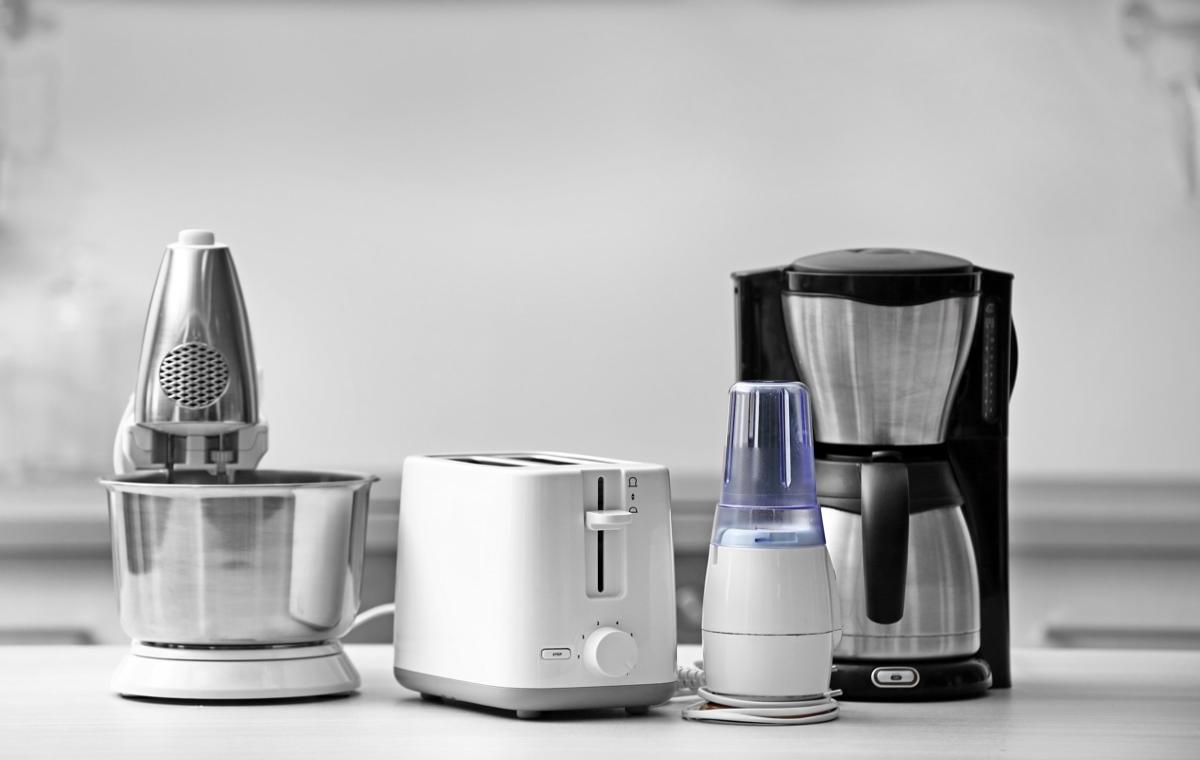
In a Bangladeshi household, the kitchen is the heart of the home. Our food is known for its bold, rich flavors but making it has always required a lot of effort. For generations, the sound of the shil-pata (stone grinder) could be heard every morning. From grinding mustard seeds for shorshe ilish to soaking lentils for crispy dal-er bora, cooking was hard, time-consuming work. But today, modern kitchen appliances are changing things. Powerful blenders, multi-cookers, and smart gadgets now help home cooks get the same delicious results in far less time making the Bangladeshi kitchen easier, faster, and just as flavorful as ever.
While the traditional stone grinder produces an incomparable texture, modern life in Dhaka, Chattogram, and beyond doesn't always leave us with the time or energy for it. This is where the mixer grinder steps in as a vital companion.
The right grinder for the kitchen isn't just about picking a stylish appliance; it’s about finding a "workhorse" that can handle the toughest dried turmeric roots and the stickiest rice batters. A high-quality mixer grinder is a long-term investment that saves you hours of manual labor, ensuring your family enjoys authentic, home-cooked meals without the physical strain. Since we use these machines daily, understanding what makes one truly "Bangladeshi-kitchen-ready" is the first step toward a smarter, easier cooking experience.
What Wattage Should You Look for in a Blender for a Bangladeshi Kitchen?
For most Bangladeshi households, a 750W blender hits the sweet spot powerful enough to grind tough spices like mustard and cumin, yet energy-efficient for daily use. If you have a large family or run a small food business, go for 1000W or above.
Motor power measured in watts (W) is basically the "muscle" of your blender. The higher the wattage, the more the machine can handle without straining. In a Bangladeshi kitchen, where we grind everything from soft onions to rock-hard dried turmeric, picking the wrong wattage isn't just inconvenient; it can burn out your motor within months.
Which Wattage Is Right for Your Kitchen?
-
500W - Best for light, everyday tasks If you mostly make mango lassis, milkshakes, or blend soft ginger-garlic paste, a 500W blender will do the job just fine. But push it to grind dry spices daily, and it will start to struggle and possibly overheat.For even lighter tasks like whipping cream or beating eggs for an omelet, a dedicated hand mixer grinder might be the more convenient choice for your kitchen
-
750W - The sweet spot for most Bangladeshi homes Regularly making shorshe (mustard paste), grinding jeera (cumin), or preparing rice batter for pitha? A 750W motor handles all of this without overheating. This is the wattage most households in Bangladesh genuinely need.
-
1000W and above - For large families or small catering setups Running a big household or a small food business? High-wattage blenders work continuously without getting tired. They're built to take the load day in, day out.
Does Motor Type Really Matter?
Yes ,and this is where many buyers get fooled by low prices.
Always look for a pure copper motor. Copper stays cooler under pressure and lasts significantly longer than cheaper aluminum alternatives. In Bangladesh's hot and humid climate, a copper motor is not just a feature, it's a long-term investment.
What Is Overload Protection, and Why Do You Need It in Bangladesh?
Our electricity supply isn't always stable. Voltage fluctuations are a real everyday problem. That's exactly why overload protection matters more here than in most places.
Overload protection is a small safety switch, usually a red button at the bottom of the blender. Think of it like a mini circuit breaker for your machine. If the motor gets too hot or the load becomes too heavy, it automatically shuts the machine off before any damage is done.
This one small feature can save you from a costly motor repair or having to replace the entire blender after just a year of use.
Match your wattage to your actual cooking habits. Don't underbuy (you'll burn out the motor) and don't overbuy unnecessarily. A well-matched blender with a copper motor and overload protection will serve your kitchen reliably for years.
What Are the Different Jars in a Mixer Grinder - and Which One Should You Use?

Most mixer grinders come with three jars: a large wet jar (1.2L–1.5L), a dry grinding jar (0.8L–1.0L), and a small chutney jar (0.3L–0.4L). Each jar has a specific job, and using the right one makes a real difference in the quality of your cooking.
When you unbox a new mixer grinder, you'll find three jars sitting inside. Most people assume they're interchangeable but they're not. Each jar is designed for a specific type of task, and using the wrong one can give you poor results or even damage the machine over time.
What Is the Large Jar Used For?
The main jar (1.2L–.5L) 1is your go-to for all wet tasks. Making smooth pitha batter, creamy lassi, or fresh watermelon juice? This is the jar you want. Its large size gives liquids enough room to blend without splashing out something you'll appreciate when you're in the middle of a busy morning.
Which Jar Is Best for Grinding Spices at Home?
The dry grinding jar (0.8L–1.0L) is the real workhorse for your homemade masalas. It's specially designed to circulate dry ingredients like coriander seeds, dried chilies, or whole cumin so they grind down into a fine, even powder. Try to grind dry spices in the large wet jar, and you'll end up with an uneven mix and a harder-to-clean mess.
Can You Make Small Batches Like Ginger-Garlic Paste in a Mixer Grinder?
Yes, and that's exactly what the chutney jar (0.3L–0.4L) is made for. Don't let its small size fool you. Because the jar is compact, the blades sit close to even a tiny amount of food meaning your daily ginger-garlic paste, green chili mash, or small chutneys blend properly instead of just spinning around. This is the jar most Bangladeshi home cooks end up using every single day.
Does Jar Material Really Matter in Bangladesh's Climate?
Absolutely and this is something many buyers overlook until it's too late.
Bangladesh's hot, humid weather speeds up plastic degradation. Plastic jars stain easily after grinding turmeric or red chili, and they hold onto smells no matter how many times you wash them. Over time, they can also develop tiny cracks that are hard to clean and not very hygienic.
That's why high-grade stainless steel jars are the smarter choice here. They don't rust, they're easy to scrub clean after a greasy curry prep, and they stay hygienic and odour-free for years. It's a small upgrade that makes everyday cooking noticeably more pleasant.
Use each jar for what it's designed for, and invest in stainless steel over plastic. Your food will taste better, your machine will last longer, and your kitchen will stay cleaner.
The Secret to Perfect Grinding: Blade Quality
The blades are the "teeth" of your mixer grinder. If they aren't sharp or strong enough, your smooth gravy will end up chunky, and your dry spices will stay gritty. In our humid climate, it is vital to choose blades made from high-grade stainless steel (look for 302 grade). This ensures they remain rust-proof even after repeated washing and heavy use.
Different jars often come with specialized blades; some are designed for tough grinding (like turmeric), while others are better for mincing onions or blending liquids.
Expert Tip: Whenever possible, choose a model with removable blades. Over time, food particles and moisture can get trapped underneath the blades, leading to bacteria growth or a "stuck" motor. Being able to pop the blades out makes deep cleaning much easier and keeps your food safe and hygienic.
What Should You Look for in a Mixer Grinder's Body, Speed, and Stability?
Look for an ABS plastic body, a pulse function for texture control, and vacuum suction feet at the base. These three features make your mixer grinder safer, more durable, and far easier to use in a typical Bangladeshi kitchen.
A mixer grinder takes a lot of punishment in a Bangladeshi kitchen daily grinding sessions, hot motors, crowded countertops, and occasional knocks. If the build quality isn't right, even a powerful machine will start showing wear within a year.
Is ABS Plastic a Good Material for a Mixer Grinder Body?
Yes , and it's actually what separates a durable machine from a cheap one.
ABS plastic isn't ordinary plastic. It's a shock-proof, heat-resistant material that can handle the warmth from a running motor and the occasional bump without cracking or warping. If you've ever seen an older mixer grinder with a cracked or discoloured body, that's usually a sign of lower-grade plastic.
When you're comparing models, check whether the product clearly mentions ABS plastic. If it doesn't, that's worth paying attention to.
Why Is the Pulse Function Useful in Bangladeshi Cooking?
Because not everything in our kitchen needs to be a smooth paste and that's exactly where the pulse function becomes your best friend.
Most mixer grinders come with three speed settings, but the pulse button is what gives you real control. It lets you grind in short, sharp bursts instead of running the motor continuously. This is perfect for:
-
Shil-pata style vorta - where you want a coarse, textured mash, not a liquid paste
-
Lightly crushed spices - where grinding too long ruins the whole texture
-
Fresh chutneys - where a chunky consistency is the whole point
Without pulse, one second too long and your ingredients turn to mush. With it, you stay in control which is how good home cooking actually works.
Top Brands in Bangladesh: Which One Should You Choose?
Choosing a brand often comes down to your budget and how much "heavy lifting" you plan to do in the kitchen. In Bangladesh, we are lucky to have a mix of global tech giants, regional spice-grinding experts, and reliable local favorites.
International Giants: Philips, Panasonic, and Bosch
If you value durability and advanced technology, these brands are top-tier. Philips and Panasonic are legendary for their motor life and safety features. Panasonic, in particular, often offers high-wattage "Heavy Duty" models (up to 1000W or even 2000W) designed to handle the toughest ingredients without breaking a sweat. Bosch is a newer premium entry, famous for its "TrueMixx" technology that tries to replicate the stone-grinding texture of a shil-pata.
These brands dominate both the mixer and blender markets. If you are comparing these brands for your next kitchen upgrade, check out our Bangladeshi Blender Buying Guide for a detailed brand-by-brand breakdown.
Regional Experts: Preethi, Jaipan, and Butterfly
These Indian brands are designed for kitchens exactly like ours. They understand that a mixer needs to grind dry turmeric and heavy lentil batters every single day. Preethi and Butterfly are known for their incredibly sturdy stainless steel jars and long-lasting blades, while Jaipan offers powerful performance at a more accessible price point.
Local Favorites: Walton and Vision
For many Bangladeshi families, Walton and Vision are the go-to choices. The biggest advantage here is Value and Service. Since these are local brands, finding a service center is incredibly easy, whether you are in Dhaka or a smaller district town. They offer competitive prices and often provide generous 1-to-2-year warranties on the motor.
Before you buy, check the service policy. Customers shopping at Rangs eMart benefit from their dedicated 'Smart Care Service’, which provides easy access to spare parts and expert technicians if your machine ever needs a tune-up.
Keeping Your Mixer Grinder Running Like New
Buying a good mixer grinder is the first step, but how you treat it determines if it lasts two years or ten. One of the most common mistakes is overfilling the jars. While it’s tempting to finish the ginger-garlic paste in one go, filling the jar to the brim puts immense pressure on the motor and can cause leaks. Aim to fill it only halfway or two-thirds for the best results.
Also, remember that these machines aren't meant for marathon runs. Avoid running the motor for more than 2–3 minutes at a time. If you’re grinding something tough, give the machine a minute to "breathe" between pulses. This prevents the motor from overheating.
A Quick Tip for New Owners: Don't panic if you notice a slight "burning smell" the first time you use your new machine. This is perfectly normal! It’s usually just the varnish on the new motor heating up for the first time and will disappear after a few uses.
Lastly, always ensure the base of the jar and the top of the machine are bone-dry before locking them together. Moisture near the motor is the leading cause of electrical shorts and rust. A little care goes a long way in keeping your kitchen helper happy!
Budgeting for Your Kitchen Companion: Price and Trust
Before buying a mixer grinder, it's helpful to understand the different price ranges. In Bangladesh, these machines are generally divided into three budget categories. :
|
Budget Tier
|
Price Range (BDT)
|
Best For
|
Popular Brands
|
|
Entry-Level
|
3,000 – 5,000
|
Small families, students, or light daily tasks like ginger-garlic paste.
|
Walton, Vision, Miyako
|
|
Mid-Range
|
6,000 – 9,000
|
The "sweet spot" for most homes; handles heavy spices and daily use.
|
Preethi, Jaipan, Philips
|
|
Premium
|
10,000+
|
Long-term investment with high power, top safety, and luxury build.
|
Panasonic, Bosch, Kenwood
|
Where to Buy Safely?
To avoid these risks, we recommend shopping at trusted authorized retailers like Rangs eMart. With a nationwide network of showrooms and a secure online store, Rangs eMart guarantees that every mixer grinder is genuine, safety-certified, and backed by a reliable motor warranty.
Making Your Final Choice
Ultimately, the most suitable mixer grinder is the one that works with the rhythm of your family. If you have a small family and mostly make juices or light pastes, a 500W model will serve you well. However, for most Bangladeshi homes where heavy spice grinding is a daily reality, stepping up to 750W is the smartest move to ensure your machine doesn't struggle.
A pretty, colorful design is nice to look at, but it’s the motor inside that does all the work. When you're choosing a mixer grinder, always pick a strong motor and a long warranty over fancy looks. A good warranty is a promise that your machine is built to last, so you can enjoy cooking for your family without any worries. Happy cooking!
Frequently Asked Questions (FAQs)
Q: Which wattage is best for a typical Bangladeshi home?
A: For most households, 750W is the sweet spot. It is powerful enough to grind tough, dry spices like turmeric and cumin or prepare thick rice batter for pitha without overheating. While 500W works for soft tasks like ginger-garlic paste, a 750W motor provides the "muscle" needed for daily traditional cooking.
Q: Why should I look for a pure copper motor?
A: In Bangladesh's hot and humid climate, a pure copper motor is a vital long-term investment. Copper stays cooler under pressure and is far more durable than cheaper aluminum alternatives. It ensures your machine can handle heavy-duty grinding for years without burning out.
Q: What should I do if my mixer grinder suddenly stops working?
A: Most modern machines have an Overload Protection switch (usually a red button at the bottom). If the motor gets too hot or the jar is too full, this safety switch trips to prevent damage. Simply wait 2–3 minutes for the motor to cool down, reduce the load in the jar, and press the red button to reset it.
Q: Can I use the jars interchangeably for dry and wet grinding?
A: It’s best not to. Each jar is designed for a specific task. The Large Jar is for liquids (lassi, juices, batters), the Medium Jar is for dry spices (masalas), and the Small Chutney Jar is for thick pastes (ginger-garlic). Using the wrong jar can lead to uneven grinding or cause ingredients to splash out.
Q: Is stainless steel better than plastic for mixer grinder jars?
A: Yes, especially in Bangladesh. High-grade stainless steel (like 302 grade) is more hygienic, easier to clean, and doesn't stain or hold odors like plastic. It also resists the humidity-driven degradation that often causes plastic jars to crack over time.

 RANCON
 Sharp
Sharp
 LG
LG
 Bosch
Bosch
 Samsung
 Toshiba
 Hitachi
 Midea
Midea
 Whirlpool
 Hisense
 Haier
Haier
 Oraimo
 Toshin Rancon
 Kemei
Kemei
 VGR
VGR
 Gazi
Gazi
 Miyako
 Philips
 Panasonic
 Pureit
 Rahimafrooz
 De'Longhi
 Rizco
Rizco
 Super Star
 Realme
 Sony
Sony
 RedSwiss
 Tesy
Tesy
 Qulik
Qulik
 Atomberg
 Amazfit
 Anker
Anker
 Apple
Apple
 Havells
 Haylou
 JBL
JBL
 Kieslect
 OnePlus
 Wiwu
Wiwu
 Xiaomi
 ACEFAST
 EarFun
 Tecno
Tecno
 TOZO
TOZO
 Tribit
 Livpure
 W-KING
 Pigeon
 FONENG
 Kospet
 ECOFLOW
 VIVO
VIVO
 Tefal
Tefal
 Oppo
Oppo
 LUMINOUS
 PAK FAN
 Recci
Recci
 Nothing
 Hoco
Hoco
 Hindware
 CARON
CARON
 Orient
 MIRA
MIRA
 TQIU
TQIU
 UGREEN
 YAMAHA
 Decakila
 TOTAL
TOTAL