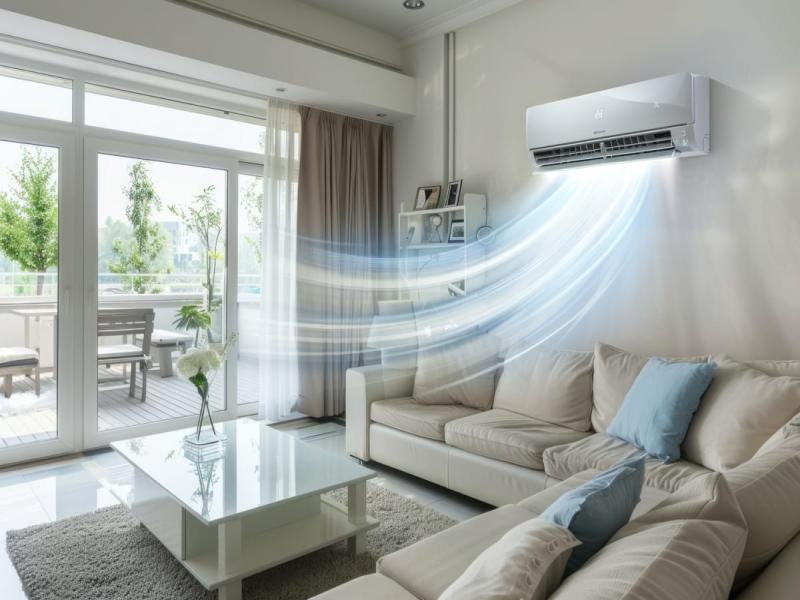
We all know the feeling of a Bangladeshi summer, the kind of heat that feels like a heavy blanket the moment you step outside. When the temperature hits 38°C and the humidity is soaring, the first thing we do is reach for the AC remote. But that sigh of relief often turns into a sigh of worry when the electricity bill arrives at the end of the month.
Many people believe that keeping a room ice-cold has to be expensive, but that isn't necessarily true. Increasing your AC’s cooling efficiency by 30% isn't about buying a brand-new, expensive machine; it’s about mastering how you use the one you already have.
By following a few expert-backed adjustments designed specifically for our tropical climate, you can enjoy a chilled room while keeping your costs manageable. Cooling efficiency is a balance between your machine's health and your home's environment. When both are optimized, you get better cooling for much less power.
Why Is Your AC Not Cooling Like It Used To?
Your AC likely isn't cooling properly because dust from the streets and high humidity have created a layer of grime on its internal coils. This prevents the machine from releasing heat, forcing it to work harder and use more electricity for less cooling.
Have you noticed your AC running for hours, yet the room still feels slightly "heavy" or warm? It’s a common frustration for many households in Bangladesh. In our part of the world, the biggest enemy of your comfort isn't just the outside temperature, it's the combination of thick dust and "sticky" humidity.
Over time, fine particles from our busy streets settle deep inside your machine. This creates a thick layer of grime on the condenser coils, which are the parts responsible for releasing heat outside. When these coils are coated in dirt, they can’t "breathe." This means your AC has to work twice as hard to push the heat out of your room. When you combine this with poor airflow from blocked vents, your unit ends up consuming much more power while delivering far less comfort.
How Does Cleaning Your AC Filter Save Money and Improve Cooling?
Cleaning your AC filter every two weeks removes dust buildup that forces your machine to work 15% harder. This simple 10-minute DIY task improves airflow, cools your room faster, and directly reduces your monthly electricity bill.
Think of your AC’s filter like a mask. If the mask is clogged with dirt, it’s much harder to breathe. When your AC filters are covered in a thick blanket of dust which happens very quickly in busy, dusty cities like Dhaka or Chattogram the machine has to "gasp" for air. This constant struggle forces the compressor to work about 15% harder, and that extra effort shows up directly on your electricity bill.
The best part? You don’t need to hire a technician or use any special tools for this. Most modern split ACs allow you to simply lift the front panel and slide out the mesh filters yourself.
How to clean your AC filter in 3 steps:
-
Remove: Gently lift the front cover and slide the filters out.
-
Wash: Take them to your bathroom and rinse them under a tap using normal room-temperature water.
-
Dry: Let them air dry completely in the shade before sliding them back in.
Since our air quality in Bangladesh is often heavy with dust, doing this just once every two weeks will keep your airflow strong. It is the easiest, most effective way to save money and stay comfortable during the long summer months.
What Is the Best Temperature Setting for AC Efficiency?
The most efficient temperature for your AC is 24°C. Setting it lower doesn't cool the room faster; it just forces the compressor to run longer without breaks. Using 24°C keeps you comfortable while significantly lowering your electricity consumption.
When you walk into a hot room, it’s tempting to grab the remote and immediately drop the temperature to 16°C, thinking it will cool the room faster. In reality, your AC works like a race car at full throttle to reach that number, but it doesn't actually blow "colder" air it just stays on longer. The smartest setting for your wallet and your comfort is 24°C. At this temperature, the air is perfectly chilled, but the compressor can take regular breaks, saving a massive amount of energy.
How Should You Use Your AC During the Monsoon?
During our rainy monsoon months in Bangladesh, the air feels heavy and damp. Instead of lowering the temperature to fight the "stickiness," try switching your AC to "Dry Mode" (usually shown as a water drop icon on your remote). This setting focuses on pulling moisture out of the air. It makes the room feel crisp and cool without overworking the machine, which is much more efficient than standard cooling mode when it's humid outside.
Can "Sleep Mode" Really Lower Your Electricity Bill?
Yes, it can! You should never forget the "Sleep Mode" button. As you sleep, your body temperature naturally drops, and the outside air cools down. When you activate Sleep Mode, the AC slowly increases the temperature setting by one or two degrees throughout the night. You won’t feel the difference while you're asleep, but you will definitely notice the savings when your monthly electricity bill arrives.
How Can You Prevent Cool Air from Escaping Your Room?
To keep your room cool, seal air leaks under doors and around windows using "door snakes" or weather strips. Additionally, block direct sunlight with heavy curtains to prevent your windows from heating up the room, which allows your AC to work less while maintaining a chill.
Imagine trying to fill a bucket with water while it has small holes in the bottom. That is exactly what happens when you run an AC in a room with air leaks. In many Bangladeshi homes, cool air constantly escapes through the gap under the bedroom door or through small cracks around window frames. If you can feel a draft of warm air when you put your hand near a window, your AC is essentially working to cool the entire neighborhood!
Why Should You Block Sunlight to Save on Electricity?
Another big culprit for high bills is "heat gain" from the sun. If you have a south or west-facing window, the intense afternoon sun turns your glass into a heater. Simply drawing heavy curtains or using thick blinds can block that heat, making it much easier for your AC to maintain a comfortable temperature.
What Are Some Easy DIY Insulation Tips?
For a quick and cheap fix, you can use "door snakes" ; these are long fabric tubes filled with sand or old cloth to block the gap at the bottom of your doors. You can also use adhesive foam tape to seal window gaps. These small, simple steps ensure that every bit of cooling you pay for stays inside the room where you need it, rather than leaking out and wasting your money.
The Forgotten Hero: Your Outdoor Unit
While we spend all our time looking at the sleek indoor unit, the real "heavy lifting" happens outside. The outdoor unit (the compressor) is responsible for releasing all the heat it pulled from your room. If that unit can't "breathe," your AC will struggle, get louder, and eventually wear out much faster.
In many apartments in cities like Dhaka, outdoor units are often squeezed onto tiny, cramped balconies or tucked into corners where air can't circulate. If the hot air it blows out just bounces off a wall and gets sucked back in, the machine starts to overheat. Make sure there is at least a couple of feet of open space around it. Also, if your unit is sitting in the direct, scorching afternoon sun, it’s fighting an uphill battle. If possible, a small shade or canopy can keep it cooler and help it work much more efficiently.
Lastly, our city air is full of soot and grime that coats the metal fins on the back of the unit. Every few months, turn off the AC power completely and gently spray the back of the outdoor unit with a garden hose (don't use a high-pressure jet). Washing away that "blanket" of dirt allows the heat to escape easily, instantly improving your cooling.
When Should You Hire a Professional for AC Servicing?
You should call a professional for a "Master Service" once or twice a year. Experts perform a deep chemical wash and check refrigerant gas levels essential steps that prevent your electricity bill from doubling and ensure your AC survives the intense 40°C Bangladeshi summer heat.
Cleaning your own filters is a great start, but once or twice a year, your AC needs a "deep dive" that only a professional can provide. Think of it like a routine checkup for your car. A professional "Master Service" involves a specialized chemical wash that clears out deep-seated grime from the internal cooling coils places you simply can't reach with a vacuum or a rag.
Why Are Refrigerant Gas Levels So Important?
One of the most important things a technician does is check the refrigerant gas levels. If your gas is even slightly low, the AC will keep running constantly without ever making the room truly cold. This "gas leak" or low pressure is a silent killer of efficiency; it often doubles your power consumption while providing only half the cooling you expect.
How Often Does Your AC Need a Professional Checkup?
In Bangladesh, we use our units heavily for 6 to 8 months of the year. Because of this high usage, having a pro look at your system right before the peak of summer is a smart move. It ensures everything is sealed and running perfectly, and a little maintenance now prevents a costly, frustrating breakdown during a 40°C heatwave!
Simple Habits That Make a Big Difference
Sometimes, the best way to help your AC is to give it a "teammate." Even when your AC is on, keeping your ceiling fan running at a very low speed can be a game-changer. Cold air is heavier than warm air, so it naturally sinks to the floor. A slow-moving fan gently pushes that cool air back up and circulates it around the entire room, making the space feel chilled much faster.
You should also take a quick look at your furniture. Is a tall wardrobe or a bookshelf standing right in front of the AC unit? If your AC is blowing directly onto the side of a cupboard, that cold air never reaches you. By keeping the path in front of your AC clear, you ensure the breeze travels freely, cooling your bed or seating area without any obstacles in the way.
The Inverter Debate: Is the Extra Cost Worth It?
If you’ve been shopping for a new AC in Dhaka or any major city in Bangladesh, you’ve likely seen the terms "Inverter" and "Non-Inverter" everywhere. While Inverter models are more expensive upfront, they are fundamentally different in how they handle electricity.
A traditional Non-Inverter AC works like a simple switch: it’s either 100% on or 100% off. It runs at full power until your room is cold, shuts down, and then "kicks" back into gear with a loud thump once the room warms up. This constant stopping and starting is where most of your electricity is wasted.
An Inverter AC, however, is much smarter. It works like a car’s accelerator. Once your room reaches the desired temperature, the motor doesn't stop it just slows down to a very low speed to maintain that chill.
Is it worth the upgrade?
In Bangladesh, a 1.5-ton Inverter AC typically costs about 15,000 to 20,000 Taka more than a regular one. However, with our current residential electricity rates where units get more expensive the more you use an Inverter AC can save you roughly 1,500 to 1,800 Taka every month on your bill.
If you use your AC for more than 6-8 hours a day, the machine will literally "pay for itself" within just two summers. After that, those monthly savings are pure profit in your pocket. If you’re buying for a bedroom you use every night, the Inverter is a clear winner for both your comfort and your bank account.
Check out this Guide to Inverter vs Non-Inverter AC to see a detailed comparison of power consumption and which one fits your specific needs.
Wrapping Up: Comfort That Fits Your Lifestyle
Staying cool in Bangladesh doesn't have to be a battle between your comfort and your monthly budget. As we've seen, getting the most out of your air conditioner is rarely about buying the most expensive model on the market. Instead, it’s about those small, consistent habits like taking ten minutes to wash a filter, choosing the right mode during a humid monsoon day, or simply drawing the curtains when the afternoon sun is at its peak.
By taking these simple steps, you aren’t just saving money on your electricity bill; you’re also extending the life of your appliance and ensuring your home remains a true sanctuary from the heat. Whether you’re upgrading to a new inverter model or optimizing the unit you’ve had for years, these expert-backed tips put the control back in your hands.

 RANCON
 Sharp
Sharp
 LG
LG
 Bosch
Bosch
 Samsung
 Toshiba
 Hitachi
 Midea
Midea
 Whirlpool
 Hisense
 Haier
Haier
 Oraimo
 Toshin Rancon
 Kemei
Kemei
 VGR
VGR
 Gazi
Gazi
 Miyako
 Philips
 Panasonic
 Pureit
 Rahimafrooz
 De'Longhi
 Rizco
Rizco
 Super Star
 Realme
 Sony
Sony
 RedSwiss
 Tesy
Tesy
 Qulik
Qulik
 Atomberg
 Amazfit
 Anker
Anker
 Apple
Apple
 Havells
 Haylou
 JBL
JBL
 Kieslect
 OnePlus
 Wiwu
Wiwu
 Xiaomi
 ACEFAST
 EarFun
 Tecno
Tecno
 TOZO
TOZO
 Tribit
 Livpure
 W-KING
 Pigeon
 FONENG
 Kospet
 ECOFLOW
 VIVO
VIVO
 Tefal
Tefal
 Oppo
Oppo
 LUMINOUS
 PAK FAN
 Recci
Recci
 Nothing
 Hoco
Hoco
 Hindware
 CARON
CARON
 Orient
 MIRA
MIRA
 TQIU
TQIU
 UGREEN
 YAMAHA
 Decakila
 TOTAL
TOTAL