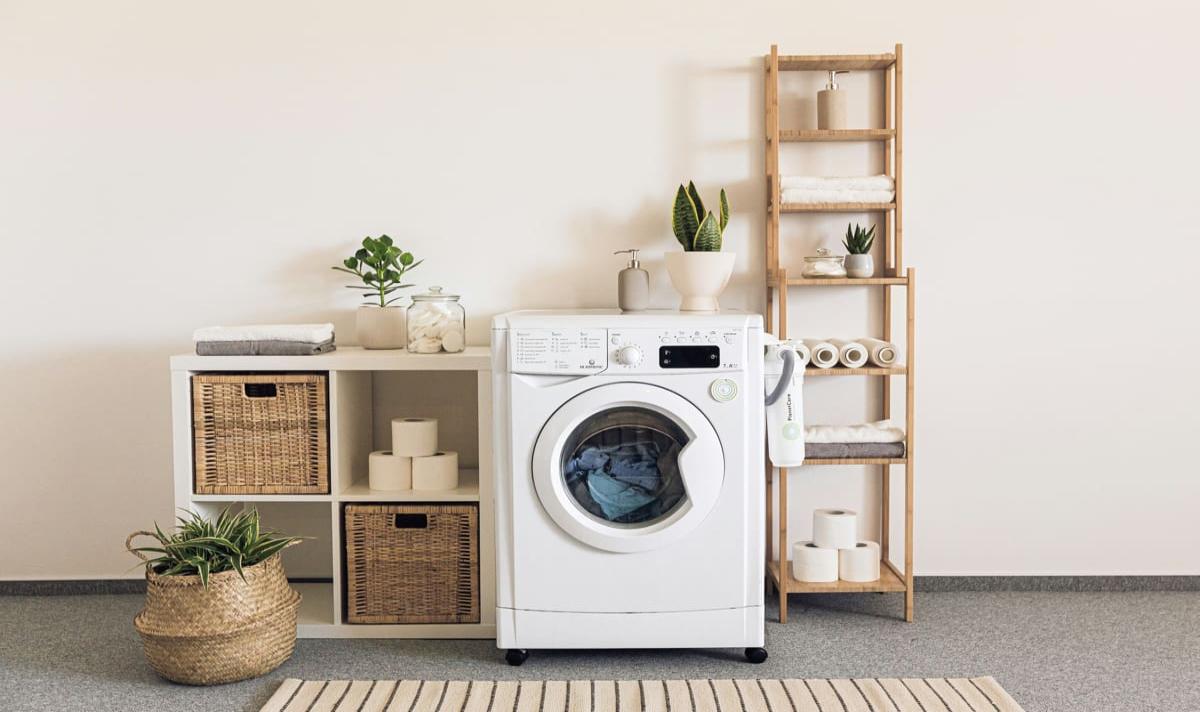
Every month, when the BPDB electricity bill arrives, many Bangladeshi families feel the same worry electricity costs keep going up, especially during summer when the AC runs longer and the washing machine is used more often. That’s why one common question comes up when buying a new washing machine: should you spend more on an inverter model, or choose a regular non-inverter machine to save money at the beginning?
It’s an important decision because your choice affects more than just the price you pay today. It can impact your monthly electricity bill, future maintenance costs, and how well your washing machine handles everyday laundry needs in a typical Bangladeshi home..
What Is an Inverter Washing Machine?
An inverter washing machine has a smart motor that adjusts its speed based on how many clothes you're washing so it uses less electricity and runs more quietly than a regular machine.
Think of a regular fan with a regulator; you can slow it down when the room cools off, instead of running it at full speed all night. An inverter washing machine works on the same idea.
Every washing machine has a motor that spins the drum. In a regular (non-inverter) machine, that motor runs at one fixed speed full power, every time, no matter how many clothes are inside.
An inverter washing machine is smarter. Its motor automatically adjusts speed based on the load. Washing a few shirts? It slows down and uses less power. Got a full load of heavy clothes? It speeds up just enough to handle the job, nothing more, nothing wasted.
How Does It Actually Work?
This is made possible by something called a brushless inverter motor a more advanced type of motor that:
-
Runs at the right speed for each wash load
-
Operates more quietly than a standard motor
-
Lasts longer because it doesn't strain unnecessarily
-
Avoids wasting electricity by never running harder than needed
In Bangladesh, you'll find inverter washing machines from brands like Samsung (EcoBubble series), LG (AI Direct Drive), and Walton which offers more budget-friendly inverter options for local buyers.
What Is a Non-Inverter Washing Machine?
A non-inverter washing machine uses a basic motor that runs at full power every time whether you're washing two shirts or a full load. It's cheaper to buy upfront, but costs more to run over time through higher electricity bills.
A non-inverter washing machine keeps things simple. It uses a traditional motor that works on one basic principle: it's either fully on or completely off.
The moment you start a wash cycle, the motor jumps straight to its maximum speed. It doesn't matter if you're washing two lightweight t-shirts or a heavy winter blanket the motor runs at full power either way. Once it finishes one part of the cycle, it shuts off completely. Then, for the next cycle, it surges back to full power all over again.
Why Does This Matter for Your Electricity Bill?
All that stopping and starting at full power creates big spikes in energy use. Each time the motor restarts, it draws a heavy burst of electricity and this happens repeatedly throughout every wash cycle. Over months of regular use, those spikes add up on your monthly electricity bill.
Why are Non-Inverter Machines Still So Popular in Bangladesh?
One simple reason: they cost significantly less to buy.
For many Bangladeshi families managing a tight budget, a lower upfront price makes all the difference. Not everyone can afford to spend more now to save later and that's completely understandable. A non-inverter machine gets the job done without a heavy initial investment.
The trade-off is straightforward:
If you're buying for the short term or working within a strict budget right now, a non-inverter machine can still be a practical choice as long as you know what to expect.
Inverter vs Non-Inverter Washing Machine — At a Glance
Before we get into the electricity numbers, here's a side-by-side look at how these two types compare across the things that matter most when you're purchase a washing machine in Bangladesh: price, noise, running cost, and how long it'll last.
|
Feature
|
Inverter
|
Non-Inverter
|
|
Motor Type
|
Variable speed (adjusts automatically)
|
Fixed speed (always full power)
|
|
Energy Consumption
|
30–50% less electricity
|
Higher electricity usage
|
|
Noise Level
|
Noticeably quieter
|
Louder during spin cycles
|
|
Lifespan
|
Longer — fewer parts wear out
|
Shorter average lifespan
|
|
Price (BD Market)
|
৳35,000–৳90,000+
|
৳18,000–৳45,000
|
|
Repair & Spare Parts
|
Costlier, fewer local technicians
|
Widely available, cheaper to fix
|
|
Best For
|
Daily use, families of 4 or more
|
Tight budgets, occasional laundry
|
Inverter vs Non-Inverter Washing Machine: The Ultimate Electricity Consumption Showdown
When we stack these two types of machines against each other, the differences in how they use power become very clear. To help you visualize exactly where your money goes, let’s look at a straightforward comparison of how they operate during a typical laundry routine.
Quick Comparison Matrix
|
Feature
|
Inverter Washing Machine
|
Non-Inverter Washing Machine
|
|
Motor Speed
|
Changes smoothly (Variable)
|
Stays the same (Fixed)
|
|
Power Surge at Start
|
Very Low (Starts gently)
|
Very High (Jumps to max speed)
|
|
Average Wattage
|
Lower (Adjusts per load)
|
Higher (Always uses full power)
|
|
Monthly Electricity Units
|
Highly efficient (Saves 30–50%)
|
Standard usage (No savings)
|
The Science of Savings: Why Inverters Win
To understand why the inverter machine wins the electricity showdown, we have to look at what happens inside the drum during a wash. A laundry cycle isn't just one long, continuous spin; it changes tasks constantly. It moves from gently agitating soapy water, to rinsing out the detergent, and finally to a high-speed spin to wring the clothes dry.
A traditional, non-inverter machine treats all of these steps exactly the same. Whether it is gently rinsing a few light shirts or spinning heavy towels, the motor runs at full blast, using the maximum amount of wattage possible.
The inverter machine handles this much more intelligently. During the rinse cycle, when the clothes just need a gentle swish through clean water, the motor slows down dramatically. It dials down its rotations per minute (RPMs) because it recognizes that maximum force isn't needed. The motor only speeds up to full power during the final spin cycle when it actually needs heavy torque to extract water from your clothes. By constantly adapting and lowering its speed whenever possible, the inverter machine prevents unnecessary power waste and keeps your electricity bill down.
The Bangladeshi Context: Real-World Monthly Bill Calculation
Based on standard Bangladeshi household usage and current electricity rates, an inverter washing machine can save you around 51 BDT every month compared to a non-inverter one that adds up to over 600 BDT a year, just from doing laundry.
To see how this affects your wallet, let’s look at a realistic math breakdown based on standard Bangladeshi household habits and current electricity rates.
Imagine a typical family of four or five living in an apartment in Dhaka or Chattogram. They use a popular 7kg capacity washing machine to handle their weekly laundry, running it 4 times every week. Each full wash and spin cycle takes about 1 hour. This means the machine operates for roughly 16 hours over a month.
According to the Bangladesh Energy Regulatory Commission (BERC), most middle-class residential households fall into the mid-to-high tier consumption slabs (like Tier 4 or 5, where you consume between 201 to 400 units total across your whole home). At these levels, the cost of electricity averages out to about 8 BDT per unit (kWh) once you consider the base rates, demand charges, and VAT.
Here is how the two machines compare in this exact scenario:
-
The Non-Inverter Machine (Standard 800-Watt Motor):
-
Running at full capacity for 16 hours, it consumes about 12.8 units of electricity per month (0.8 16 ).
-
The Inverter Machine (Smart 400-Watt Average Consumption):
-
Because it adjusts its speed and lowers its power intake throughout the cycle, it averages around 400 watts, consuming just 6.4 units of electricity (0.4 kW * 16 hours).
The Final Savings
While a difference of around 51 BDT per month might seem small on a single bill, the numbers build up over time. Over a single year, the inverter machine keeps an extra 614 BDT in your pocket. More importantly, if you have a larger family running heavy loads daily, your savings can easily double or triple, making a highly noticeable impact on your long-term household budget.
Beyond Electricity: Other Crucial Differences You Must Know
While saving money on your electricity bill is a massive benefit, the differences between these two types of washing machines impact your daily life in several other ways.
Peace and Quiet in the Home
If you live in a high-density apartment complex in Dhaka or Chattogram, you know how closely packed the flats can be. A traditional non-inverter machine uses a series of belts and pulleys to spin the drum. When it hits the high-speed spin cycle, it can create a loud, vibrating racket that echoes through your home and might even annoy your neighbors. Inverter machines especially those with "Direct Drive" technology where the motor attaches directly to the drum run beautifully quiet. You can easily run a load of laundry late at night without disturbing anyone's sleep.
Longer Warranties and Better Reliability
Because non-inverter motors are constantly starting and stopping at maximum speed, they experience a lot of physical friction, causing them to wear out faster. Inverter motors start up gently and run smoothly, which greatly extends their lifespan. Local manufacturers and global brands are well aware of this durability. That is why they confidently offer massive 10 to 20-year warranties on inverter motors, compared to the standard 5 to 10 years you usually get with a non-inverter model.
Gentle Care for Your Wardrobe
Our traditional Bangladeshi clothing requires careful handling. The fixed, aggressive speeds of a non-inverter machine can be quite harsh on delicate cotton sarees, embroidered kurtis, and even the seams of your favorite denim. Because an inverter machine can slow down its rhythm, it treats your clothes with much more care. It thoroughly cleans your garments without aggressively pulling or stretching the fabric, helping your favorite outfits look new for a much longer time.
Electricity Consumption — Real Numbers for Bangladesh
This is the section most people really come for because at the end of the day, the question isn't just "which is better?" It's "how much money will I actually save, and is it worth it?"
Let's look at the real numbers.
How Much Power Does Each Type Use Per Wash Cycle?
A typical inverter washing machine uses around 0.3 to 0.6 kWh per wash cycle. A non-inverter machine uses roughly 0.6 to 1.2 kWh for the same load, sometimes double.
Now let's put that into taka.
If you do one load of laundry every day, here's what a month looks like at the current BPDB electricity rate of roughly ৳৮ to ৳১২ per unit (kWh):
When Does the Inverter Machine Actually Pay for Itself?
An inverter model typically costs ৳10,000–৳15,000 more than a comparable non-inverter machine. That gap feels significant when you're standing in a showroom.
But here's the math: if you save around ৳250 per month on your electricity bill, you recover that extra cost in roughly 4 to 5 years and every month after that is pure savings.
That said, be honest with yourself about your habits. If you only do laundry two or three times a week, your savings will be lower, and the break-even point stretches further. The inverter machine makes the most financial sense for families who wash daily or run large loads regularly.
Note: Electricity tariffs in Bangladesh are periodically revised by BPDB. Always check the latest unit rate when doing your own calculation. The numbers above are based on current residential rates and will shift if tariffs change.
What About Load-Shedding and Voltage Fluctuation?
This one matters a lot in Bangladesh and it's a point most comparison articles skip entirely.
Frequent voltage fluctuations are a real problem, especially outside major city centres. And this is where inverter machines have a hidden advantage: their brushless motors are built to handle inconsistent power supply far better than conventional fixed-speed motors.
Non-inverter motors run at a fixed electrical load so when voltage suddenly drops or spikes, the motor takes the full hit. Over time, this is one of the most common reasons these machines burn out early, especially in areas with unreliable electricity supply.
If you live in a peri-urban area or a neighbourhood that regularly sees voltage issues, that's one more reason to seriously consider the inverter option not just for savings, but for longevity.
Which One Should You Buy? — Expert Verdict by Buyer Type
There's no single right answer but there is a right answer for your situation. Here's a straightforward verdict based on different types of buyers in Bangladesh:
You do laundry every day (family of 4 or more) - Go with the inverter machine. The electricity savings add up fast with daily use, and you'll recover the extra cost well within the machine's lifespan.
You're working with a budget under ৳25,000 - The non-inverter is your realistic option and it can still serve you well for light to moderate use. Just don't expect the same electricity savings.
Your area has frequent voltage fluctuations or load-shedding - The inverter machine is safer for your appliance long-term. Its motor handles inconsistent power much better, which means fewer repairs and a longer life.
You want to keep repair costs low and find technicians easily - The non-inverter wins here. Spare parts are widely available across Bangladesh, and most local repair shops know these machines inside out.
You're buying for the long haul 7 to 10 years - Invest in the inverter model. Fewer mechanical parts wearing out means it simply lasts longer.
Don't just ask "inverter or non-inverter?" check the energy star rating label too. A well-rated non-inverter machine can sometimes use less electricity than a poorly rated inverter model. The star rating and the motor type together tell the real story.
Top Inverter & Non-Inverter Washing Machines Available in Bangladesh
If you are ready to transition from research to purchasing, finding the right model that fits your budget and lifestyle is your next step. The Bangladeshi market offers excellent choices ranging from premium global manufacturers to highly reliable, cost-effective local brands.
Top Inverter Picks (For Long-Term Savings & Quiet Performance)
-
Samsung WW70T4020CX (7kg, Front Load, Inverter): A highly popular choice for urban apartments. It features Hygiene Steam and digital inverter tech, with a price range typically between ৳55,000 to ৳65,000.
-
LG FHM1208BDL (8kg, Front Load, AI DD Inverter): A premium model utilizing Artificial Intelligence Direct Drive to sense fabric softness and protect clothes. It generally ranges from ৳68,000 to ৳78,000.
-
Walton WWM-ATG80 (8kg, Top Load, Inverter): An outstanding value option from a household local brand. It brings the power savings of an automatic inverter motor down to a highly accessible price point of around ৳30,000 to ৳34,000.
Top Non-Inverter Picks (For Budget-Conscious & Occasional Buyers)
-
Singer SWM-T75S (7.5kg, Top Load): A reliable, straightforward workhorse entering the budget segment at around ৳22,000 to ৳26,000, making automation affordable.
-
Jamuna JWM-120 (Semi-Automatic / Top Load series): Known for robust build quality and exceptional availability across rural and peri-urban markets, often priced well under ৳20,000.
-
Whirlpool Classic Series (7kg to 8kg, Top Load): A trusted mid-range contender priced between ৳25,000 to ৳32,000, known for heavy-duty wash cycles.
Tips to Reduce Washing Machine Electricity Costs
Regardless of whether you own a traditional fixed-speed model or a highly efficient smart inverter machine, your daily laundry habits have a massive impact on your monthly utility bills. Implementing a few practical adjustments can help optimize your machine's performance and shave a noticeable amount from your next DESCO or DPDC statement.
-
Always Optimize Load Capacity: Running several tiny loads of laundry wastes a massive amount of water and electricity. Wait until you have a full load before turning on your machine, but avoid overstuffing the drum, which strains the motor.
-
Utilize Eco Wash Settings: Whenever your garments only require a light refresh, select the shortest effective cycle or activate your machine's dedicated energy-saving mode to cut runtime down drastically.
-
Avoid Hot Water Cycles: Heating water accounts for a staggering amount of an appliance's energy draw. Stick to cold water settings for standard clothes to keep your energy consumption low.
-
Steer Clear of National Peak Hours: Try running your laundry cycles in the morning or late at night. Avoiding the country's high-demand evening peak hours (5:00 PM to 11:00 PM) helps lower pressure on our local power grids.
-
Perform Regular Maintenance: Clean out the lint filter and remove scaling from the drum regularly. A clean machine encounters less physical resistance, allowing the spin speed to ramp up smoothly without overworking the motor.
Conclusion & Final Buying Verdict
Choosing between an inverter and a non-inverter washing machine really comes down to one question: what matters more to you right now saving money today, or saving money every month going forward?
If your budget is tight and you need a reliable washing machine without spending a large amount upfront, a non-inverter machine is a completely practical choice. It gets the job done, and there's no shame in picking what works for your situation today.
But if you can manage the higher initial cost, an inverter machine quietly pays you back over time through lower electricity bills every month, less noise during wash cycles, and a motor that's built to last longer.
Neither choice is wrong. It's simply about knowing where you stand today and where you want to be a year or two from now.

 RANCON
 Sharp
Sharp
 LG
LG
 Bosch
Bosch
 Samsung
 Toshiba
 Hitachi
 Midea
Midea
 Whirlpool
 Hisense
 Haier
Haier
 Oraimo
 Toshin Rancon
 Kemei
Kemei
 VGR
VGR
 Gazi
Gazi
 Miyako
 Philips
 Panasonic
 Pureit
 Rahimafrooz
 De'Longhi
 Rizco
Rizco
 Super Star
 Realme
 Sony
Sony
 RedSwiss
 Tesy
Tesy
 Qulik
Qulik
 Atomberg
 Amazfit
 Anker
Anker
 Apple
Apple
 Havells
 Haylou
 JBL
JBL
 Kieslect
 OnePlus
 Wiwu
Wiwu
 Xiaomi
 ACEFAST
 EarFun
 Tecno
Tecno
 TOZO
TOZO
 Tribit
 Livpure
 W-KING
 Pigeon
 FONENG
 Kospet
 ECOFLOW
 VIVO
VIVO
 Tefal
Tefal
 Oppo
Oppo
 LUMINOUS
 PAK FAN
 Recci
Recci
 Nothing
 Hoco
Hoco
 Hindware
 CARON
CARON
 Orient
 MIRA
MIRA
 TQIU
TQIU
 UGREEN
 YAMAHA
 Decakila
 TOTAL
TOTAL