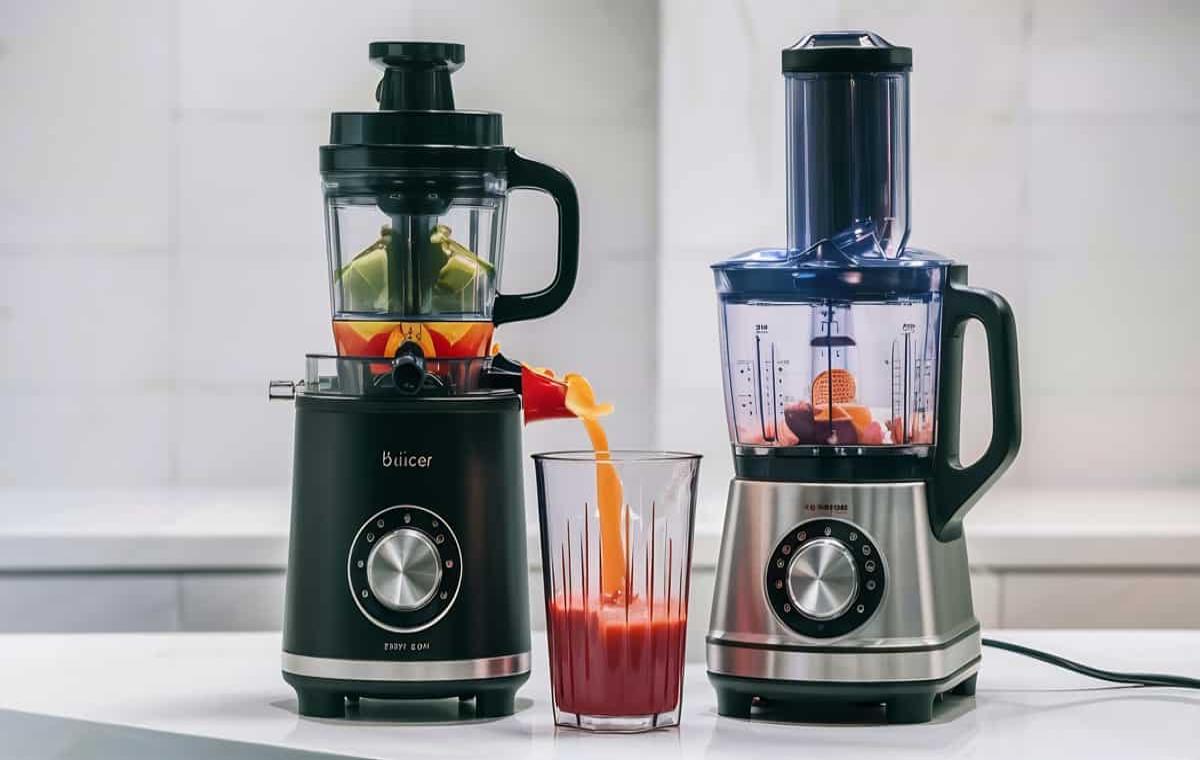
Walk into any kitchen appliance store in Bangladesh, and you’ll quickly notice two machines sitting side by side: a blender and a mixer grinder. At first glance, they look similar. Both have jars, blades, and motors. So naturally, many buyers ask the same question: Do I really need both, or can one do everything?
The answer depends entirely on how you cook.
If your kitchen revolves around everyday Bangladeshi meals grinding fresh masala, making ada-rosun bata, preparing dal batter, or blending soaked rice for pitha, choosing the wrong appliance can lead to frustration, wasted money, and a machine that simply cannot keep up with your needs.
What Is a Mixer Grinder? How It Works and Why It Suits Bangladeshi Cooking
A mixer grinder is a powerful kitchen appliance that uses high torque (twisting force) to crush, grind, and blend tough, solid ingredients. It comes with three jars for different tasks and is ideal for making traditional Bangladeshi pastes, spice powders, and rice flour at home.
Motor, Jars, and Blades: The Mechanical Core
A mixer grinder is built for raw power, not just speed. Its motor focuses on torque, the twisting force needed to break down hard, solid ingredients that a regular blender simply cannot handle.
When you buy one, it typically includes:
-
A motorized base (750W to 1000W) — strong enough for tough grinding jobs
-
Three stainless steel jars, each for a specific task:
-
Small chutney jar — for thick spreads and wet pastes
-
Medium dry grinding jar — for whole spices and hard ingredients
-
Large liquidizing jar — for smoother, larger batches
-
A plastic or rubber coupler connecting the motor to the blades, designed to handle high pressure without wearing out quickly
This combination of motor power and jar variety is what makes it so versatile in a real kitchen.
The Perfect Modern Replacement for the Shil Pata
For generations, home cooks prepared authentic Bengali dishes using a heavy shil pata (grinding stone). It worked well but it was exhausting and took a long time. A mixer grinder does the same job in minutes, with far less effort.
What makes it especially suited for Bangladeshi cooking is its ability to handle thick, low-water textures exactly what most of our recipes need.
Here is what it handles with ease:
-
Ada-rosun bata (ginger-garlic paste) — grinds smoothly without needing constant water
-
Holud and morich powder (turmeric and chili) — pulverizes dried spices into fine, vibrant powder
-
Chalergura (rice flour) — grinds soaked rice for homemade pitha, especially useful in winter
-
Dal (lentils) — processes thick lentils for making bori
-
Pesta badam (pistachios and almonds) — crushes nuts for traditional sweets and desserts
If these ingredients are a regular part of your cooking, a mixer grinder is not just convenient, it is genuinely built for the way we cook.
What Is a Conventional Blender? Speed, Smoothness, and How It Works
A conventional blender liquefies soft, wet ingredients using high-speed spinning blades. It is best for smoothies, lassi, borhani, milkshakes, and purees any recipe that needs a smooth, pourable result.
A conventional blender is built around speed, not crushing power. While a mixer grinder breaks down hard, solid ingredients, a blender does the opposite: it takes soft fruits, liquids, yoghurt, and ice and turns them into something perfectly smooth and drinkable. If beverages and fluid-based cooking are a big part of your daily routine, a blender is made for exactly that.
The Vortex That Does the Job: How a Blender Works
The secret behind a blender's smooth results is the vortex it creates inside the jar. When the motor spins the blades at high speed, it pulls everything at the center of the jug downward into the blades and pushes it back up along the sides. This continuous loop keeps going until every ingredient is broken down into a silky, uniform consistency.
Every part of the blender is designed to support this process:
-
Tall glass or BPA-free plastic jug — deep enough to contain the swirling liquid without splashing
-
High RPM motor — built for speed rather than torque, ideal when plenty of liquid is present
-
Multi-angled ice-crushing blades — wide enough to handle frozen fruit and hard ice without getting stuck
-
Pulse mode — short bursts of power that let you control texture and avoid over-blending
One important thing to remember: the vortex only works properly when there is enough liquid in the jar. Without it, the blender loses its advantage so always add sufficient liquid before blending.
Real Recipes, Real Life: Where a Blender Genuinely Performs
Across Dhaka, Chittagong, and other urban areas in Bangladesh, more people are building health-conscious daily habits: morning smoothies before work, protein shakes after the gym, refreshing cold drinks through the summer heat. A blender fits naturally into this lifestyle.
Here is where it truly earns its place in the kitchen:
-
Borhani and lassi — creates the smooth, frothy texture that feels right for these traditional drinks, something a mixer grinder simply cannot replicate
-
Breakfast smoothies — blends fruit, yoghurt, and milk into a drinkable, consistent result in under a minute, perfect for busy urban mornings
-
Milkshakes for kids — turns ice cream and milk into a thick, creamy shake with no lumps
-
Tomato puree for gravies — liquefies blanched tomatoes into a rich, smooth base for everyday curries and stews
-
Crushed ice for summer drinks — handles ice with ease, ideal during Bangladesh's intense summer heat
If smooth drinks, health shakes, and fluid-based recipes are central to how you cook and eat, a conventional blender is purpose-built for exactly that kind of modern kitchen routine.
Mixer Grinder vs Blender - Key Differences at a Glance
Not sure which one actually belongs in your kitchen? The short answer is: it depends on what you cook. A mixer grinder is built for heavy-duty kitchen tasks grinding spices, making batter, and blending thick pastes. A blender, on the other hand, shines when you're making drinks and soups. Here's a side-by-side look to make things clearer.
|
Feature
|
Mixer Grinder
|
Blender
|
|
Primary Use
|
Grinding, mixing, pasting
|
Blending liquids, smoothies
|
|
Motor Power
|
500W – 750W
|
300W – 600W
|
|
Jar Type
|
Multiple jars (dry/wet/chutney)
|
Single tall jar
|
|
Ideal For
|
Masala, batter, coconut paste, dal
|
Smoothies, lassi, soups, juices
|
|
Noise Level
|
Moderate to high
|
Moderate
|
|
Price in BD
|
৳2,500 – ৳8,000+
|
৳1,800 – ৳6,000+
|
|
Suitable For BD Cooking?
|
Highly suitable
|
Limited for traditional recipes
|
|
Best Brand (BD Market)
|
Philips, Walton, Vision
|
Philips, Miyako, Sharp
|
Can You Use a Mixer Grinder as a Blender?
Most mixer grinders come with a liquidising jar, which works reasonably well for lassi, smoothies, and even soups. It won't give you the ultra-smooth, frothy texture a dedicated blender delivers, but for everyday use, it gets the job done. If your budget is tight, a mixer grinder with a liquidising jar comfortably handles around 80% of blending tasks.
A blender, however, cannot replace a mixer grinder for grinding dry spices or making thick pastes. The blade geometry is simply wrong because blender blades are angled to create a vortex in liquid, not to crush hard ingredients. The motor also lacks the torque needed for dry grinding without overheating.
If you want the best of both worlds without buying two separate appliances, look at combo models like the Philips HL7757 or similar options available in the Bangladeshi market. These are a smart, space-saving solution for smaller kitchens.
Top Things to Check Before Buying in Bangladesh
Whether you are shopping online or visiting a physical Rangs eMart showroom, keep these five localized factors in mind to ensure you get a machine that lasts for years.
Buy a mixer grinder or blender in Bangladesh isn't just about picking the most popular brand, it's about knowing what actually matters for your kitchen, your city's power supply, and your after-sales peace of mind. Here are five things worth checking before you spend your money.
1. Motor Power (Wattage) Don't go below 500W if you plan to grind spices or lentils regularly. For larger families or heavier daily use, I think grinding coconut, whole masala, or soaked dal 750W or above is the safer choice. A weak motor overheats quickly and won't last.
2. Jar Material Stainless Steel vs Plastic In Bangladesh's humid climate, plastic jars stain, absorb smells, and can crack over time. Stainless steel jars are far more durable, easier to clean, and hold up much better through years of daily use. Always prioritise stainless steel, especially for grinding jars.
3. After-Sales Service in Your City This one is often overlooked and regretted later. Before buying, check whether the brand has a service centre in your city. Brands like Philips and Walton have established service networks across Bangladesh, including Dhaka, Chattogram, Sylhet, and several other districts. A good local service network means you won't be stranded if something stops working after a few months.
4. Warranty Period A one-year warranty is the bare minimum to accept. For reputable brands selling in Bangladesh, two years is now considered standard. Always ask for the warranty card at the time of purchase and check whether it covers the motor separately. That's the most expensive part to replace.
5. Voltage Compatibility and Power Protection Bangladesh runs on a 220V–240V power supply, but voltage fluctuations are common especially outside major city centres. Look for appliances that are rated for this range. As a bonus, check whether the model includes thermal overload protection, a built-in safety feature that automatically shuts the motor off if it overheats. It's a small detail that can significantly extend the life of your appliance.
Final Verdict - Mixer Grinder or Blender?
At the end of the day, the choice comes down to how you cook. A mixer grinder handles the heavy, everyday grinding that sits at the heart of Bangladeshi and South Asian cooking spices, chutneys, lentils, and pastes. A blender is brilliant for drinks and smoothies, but it was never built for that kind of work.
For most households in Bangladesh, start with a good mixer grinder. Once that need is covered, a blender makes a great complementary addition not a replacement.
At Rangs eMart, we carry a wide range of both mixer grinders and blenders from trusted brands, so whatever your kitchen needs, you can find the right fit in one place.

 RANCON
 Sharp
Sharp
 LG
LG
 Bosch
Bosch
 Samsung
 Toshiba
 Hitachi
 Midea
Midea
 Whirlpool
 Hisense
 Haier
Haier
 Oraimo
 Toshin Rancon
 Kemei
Kemei
 VGR
VGR
 Gazi
Gazi
 Miyako
 Philips
 Panasonic
 Pureit
 Rahimafrooz
 De'Longhi
 Rizco
Rizco
 Super Star
 Realme
 Sony
Sony
 RedSwiss
 Tesy
Tesy
 Qulik
Qulik
 Atomberg
 Amazfit
 Anker
Anker
 Apple
Apple
 Havells
 Haylou
 JBL
JBL
 Kieslect
 OnePlus
 Wiwu
Wiwu
 Xiaomi
 ACEFAST
 EarFun
 Tecno
Tecno
 TOZO
TOZO
 Tribit
 Livpure
 W-KING
 Pigeon
 FONENG
 Kospet
 ECOFLOW
 VIVO
VIVO
 Tefal
Tefal
 Oppo
Oppo
 LUMINOUS
 PAK FAN
 Recci
Recci
 Nothing
 Hoco
Hoco
 Hindware
 CARON
CARON
 Orient
 MIRA
MIRA
 TQIU
TQIU
 UGREEN
 YAMAHA
 Decakila
 TOTAL
TOTAL