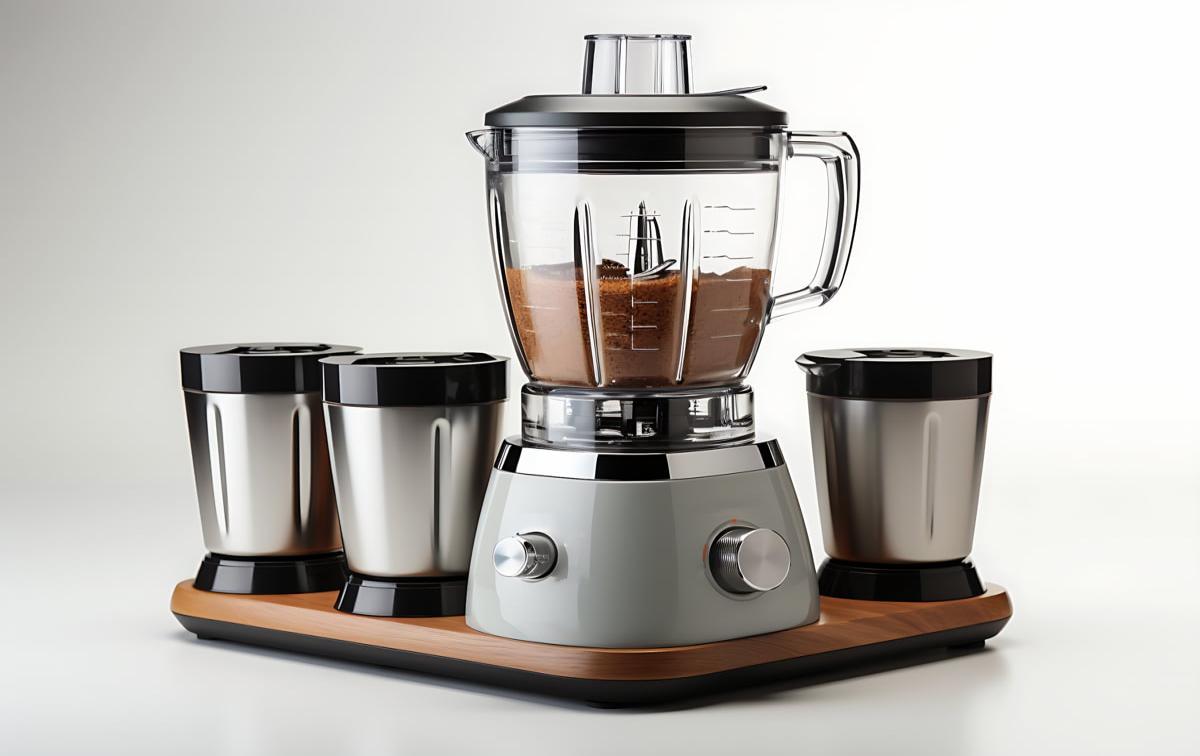
A mixer grinder is one of those kitchen appliances you don’t really notice until it stops working when you need it most. . Whether you're grinding fresh spices for a biryani masala, blending a dal paste, or making a quick smoothie before leaving for work, this one machine handles it all. In most Bangladeshi homes, it runs every single day.
But here's the problem: walk into any electronics shop in Dhaka and you'll find dozens of brands, all making big promises. Some cost ৳2,000, others ৳12,000. How do you know which one is actually worth your money?
The wrong choice often shows up within months a motor that overheats after five minutes of grinding turmeric, a jar that cracks, or a brand with zero service centers outside Dhaka. These are real frustrations that thousands of buyers in Bangladesh deal with every year.
Why Choosing the Right Mixer Grinder Matters in Bangladesh
Bangladeshi cooking is tough on kitchen equipment .We grind hard spices like turmeric, dried chili, and cumin almost every day. We make wet masala pastes, blend thick dal, and sometimes run the machine back to back without a break. Not every mixer grinder is built to handle that kind of workload.
On top of that, voltage fluctuations are a real issue across Bangladesh, especially outside major cities. A motor that isn't properly rated for this kind of electrical stress can burn out within a year.
Prices in the local market range from ৳2,000 to over ৳15,000, but a higher price tag doesn't always mean better quality. And if the brand has no service center in your area, even a small repair can turn into a big headache.
Knowing what to look for before buying can save you money, time, and unnecessary frustration later. Thousands of kitchen appliances are handled every year across Rangs eMart .
Motor Power (Wattage) - The Most Important Factor
For Bangladeshi kitchens, a motor of at least 600 watts is recommended for regular daily use. If you grind hard spices, make thick pastes, or run the machine multiple times a day, you'll want to go higher.
Wattage simply tells you how powerful the motor is. A higher wattage motor grinds faster, handles tougher ingredients, and runs cooler because it isn't straining. A weaker motor has to work harder to do the same job and that's what causes it to overheat and fail early.
For most households in Bangladesh, 500W–750W is sufficient for everyday cooking. But if your kitchen sees heavy use, large family, frequent entertaining, grinding whole spices in bulk aim for 750W–1000W.
One thing to watch out for: many brands advertise "peak wattage," which is the maximum the motor can hit for a short burst. What actually matters is the running wattage and the consistent power it delivers during normal operation. Always ask about this, or check the product spec sheet carefully.
Also look for overload protection. This is a safety feature that automatically shuts the motor off if it gets too hot or is overworked. Given Bangladesh's voltage fluctuations, this one feature can be the difference between a machine that lasts five years and one that burns out in five months.
Quick Tip: For grinding hard spices like turmeric and dried chili daily, never go below 600W no matter how good the deal looks.
Jar Capacity and Number of Jars
Most mixer grinders come with multiple jars, and each one is designed for a different job. Buying a machine with the right jars for your cooking style makes a bigger difference than most people realise.
For Bangladeshi kitchens, a 3-jar set is the most practical choice:
|
Jar Type
|
Capacity
|
Best For
|
Recommended Material
|
|
Chutney Jar
|
0.3L
|
Small quantities, chutneys, pastes
|
Stainless Steel
|
|
Dry Grinding Jar
|
0.75L – 1L
|
Spices, rice flour, lentils
|
Stainless Steel
|
|
Blending / Wet Jar
|
1.5L – 1.75L
|
Smoothies, lassi, wet masala
|
Stainless Steel or Food-Safe Plastic
|
Stainless steel jars are more durable, easier to clean, and don't absorb odours or stains from strong spices, a real concern when you're grinding turmeric or red chili regularly. Food-safe polycarbonate (plastic) jars are lighter and fine for liquids, but they can discolour and scratch over time.
Pay attention to the shape of the jar too. Wet masala grinding like making a smooth onion-ginger paste needs a jar with a narrower base that pulls ingredients down toward the blade. Wide, shallow jars often leave chunks on the sides.
Finally, check the lid and seal. Leaking jars are one of the most common complaints about budget models in Bangladesh. Give the lid a firm twist before buying, or check buyer reviews specifically for this issue.
Blade Quality and Design
The blade is what actually does the work and a poor-quality blade will ruin your grinding results no matter how powerful the motor is.
Sharp, well-designed blades grind spices into a fine, even powder. Dull or poorly shaped blades just bruise the ingredients, leaving coarse bits and uneven textures. If you've ever made a masala that tasted "raw" despite grinding for a long time, a weak blade is often the culprit.
Look for blades made from SS304 stainless steel. This is a food-grade material that stays sharp longer and resists rust. Bangladesh's humid climate is particularly harsh on low-grade metal blades. Cheap blades can start showing rust within a few months, which is both unhygienic and a sign the blade is already degrading.
When it comes to blade design, 4-blade assemblies generally outperform 2-blade ones for fine grinding; they cover more surface area and reduce grinding time. For wet grinding like masala pastes, look for blades that are angled in multiple directions so ingredients don't just spin around the edges.
Also check how easily the blade assembly is removed for cleaning. In a kitchen where the grinder runs daily, blades that are difficult to detach quickly become unhygienic, food residue gets trapped and is hard to wash out properly.
Before buying, ask whether replacement blades are available locally for that model. Some imported brands look great in the shop but have zero spare parts in the BD market.
Speed Settings and Control
Not everything you grind needs the same speed. A good mixer grinder gives you control and that control directly affects the quality of your cooking.
Most models come with 3 speed settings, which is the right minimum for a Bangladeshi kitchen:
-
Low speed — for soft ingredients, wet grinding, or starting a tough grind gently
-
Medium speed — for everyday spice grinding and blending
-
High speed — for fine powders, smoothies, and tough dry spices
Beyond the three speeds, look for a pulse function. This lets you run the machine in short bursts instead of one continuous spin. It's ideal when you want a coarser texture grated coconut, roughly ground peanuts, or a chunky chutney where you don't want everything turned to paste. Without a pulse, it's easy to over-grind in seconds.
For the controls themselves, dial knobs tend to hold up better over time than push-button switches especially in Bangladesh's humid kitchen environment where moisture can work its way into electrical components. Buttons can become sticky or unresponsive; a solid knob rarely does.
If you regularly make chutneys or coarse pastes, the pulse button isn't optional; it's the one feature that gives you proper texture control.
Build Quality and Body Material
A mixer grinder that feels solid in the shop will likely last. One that feels flimsy usually is.
Most mixer grinders are built with ABS plastic for the body, the same hard, impact-resistant material used in car dashboards and power tools. Good ABS feels dense and smooth, handles heat without warping, and doesn't crack under daily stress. Cheap plastic, by contrast, feels hollow, heats up quickly to the touch, and often develops cracks or discoloration within a year of regular use. If you can, pick it up in the shop and give it a firm hold you'll feel the difference immediately.
Weight matters more than most buyers realise. A heavier base means better stability during grinding. Lightweight machines "walk" across the countertop during high-speed operation, especially on smooth kitchen surfaces, which is both annoying and a safety concern.
Check the rubber feet on the bottom. These small anti-skid pads absorb vibration and keep the machine in place. If they look thin or painted on, they'll wear off quickly. Good rubber feet are thick, firm, and grippy.
Also pay attention to how hot the body gets after a few minutes of continuous use. A machine that becomes uncomfortably warm on the outside within five minutes is a sign the motor is running too hot which shortens its life significantly.
Modern Bangladeshi kitchens are increasingly style-conscious too. Most reputable brands now offer clean, contemporary designs in neutral tones that sit well on an open countertop worth considering if aesthetics matter to you.
Noise Level
No mixer grinder is silent but there's a big difference between a machine that hums and one that sounds like a construction site in your kitchen.
Cheaper models can hit noise levels above 90 decibels, roughly as loud as heavy traffic. In an apartment in Dhaka or Chittagong, running one of these early in the morning is a guaranteed way to upset your neighbours and your own nerves.
Better-built machines use balanced motors and denser body materials that absorb vibration rather than amplify it. The result isn't silence, but it's noticeably more manageable.
Since you can't always test noise in a shop, look up the model on YouTube before buying. Real users often post demo videos, and you can judge the noise level yourself in thirty seconds.
Safety Features
A mixer grinder spins sharp blades at high speed near your hands. Safety features aren't optional extras; they're what stand between a smooth cooking experience and a serious accident.
The most important one is overload protection, sometimes called a thermal cutoff. If the motor gets too hot or is pushed beyond its limit which happens easily during long grinding sessions or with tough ingredients this feature automatically shuts the machine off before the motor burns out. Without it, you either damage the machine or, in worse cases, create a fire risk.
Look for a jar safety lock mechanism. This ensures the machine simply won't start unless the jar is properly fitted and locked in place. It sounds basic, but cheaper models skip this entirely meaning the machine can be switched on with no jar attached, which is genuinely dangerous, especially with children around.
Speaking of children, if your household has young kids, check whether the model has a child safety lock. Many families in Bangladesh don't think about this until something goes wrong.
The non-slip base we covered in build quality also plays a safety role. A machine that moves during operation can tip, pull a cord, or slide off the counter.
For imported brands, look for CE certification on the packaging or product label. This indicates the machine has been tested against basic electrical and mechanical safety standards. Avoid unbranded or unverified imports that carry no safety markings at all; they may be cheap upfront but carry real risks.
Brand Reputation and After-Sales Service in Bangladesh
A mixer grinder can develop problems, even a good one. A stuck blade, a worn coupling, a motor that trips. What separates a minor inconvenience from a major headache is whether your brand has a service center near you.
Here's a quick look at popular brands available in the local market:
|
Brand
|
Warranty
|
BD Service Network
|
Approx. Price Range (BDT)
|
Best For
|
|
Walton
|
1–2 years
|
600+ sales outlets, 81+ service points nationwide
|
৳2,500 – ৳6,000
|
Budget to mid-range, widest service coverage
|
|
Vision
|
1 year
|
Available in major cities
|
৳2,000 – ৳5,000
|
Budget buyers
|
|
Singer
|
1 year
|
Available in major cities and towns
|
৳2,500 – ৳5,500
|
Everyday household use
|
|
Philips
|
1–2 years
|
Limited; mainly Dhaka and Chittagong
|
৳5,000 – ৳12,000
|
Quality-focused buyers in major cities
|
|
Panasonic
|
1 year
|
Limited; urban centers only
|
৳4,500 – ৳10,000
|
Mid to premium range
|
|
Miyako
|
1 year
|
Available in major districts
|
৳2,000 – ৳4,500
|
Affordable, widely available
|
A few things to keep in mind when evaluating brands:
Check warranty terms carefully. A 1-year warranty is standard, but some brands offer 2 years specifically on the motor, the most expensive part to replace. Always ask about this before buying.
Verify the service center in your area before purchasing. Don't rely on what the sales staff tells you at the shop. Go to the brand's official website or call their customer service line and confirm there's a service point in your district. Walton, for example, has one of the most extensive service networks in Bangladesh useful if you're outside Dhaka.
Buy from an authorised dealer. Grey market imports (products brought in unofficially without proper documentation) often look identical to genuine models in the shop but come with no valid warranty in Bangladesh. If something goes wrong a few months in, you have no recourse. Always ask for an official warranty card and receipt.
Price vs. Value: What to Expect at Each Budget in Bangladesh
Spending more doesn't always mean getting more but spending too little almost always means compromising somewhere important. Here's what your money actually gets you at each price point.
Budget: BDT 1,500–3,000 You'll find basic 2-jar models from local and lesser-known brands in this range. Motor power is typically 300W–450W workable for light, occasional use but likely to struggle with daily heavy grinding. Safety features like overload protection and jar locks are often absent. Build quality tends to feel thin, and warranty support can be unreliable. Fine for a secondary kitchen or very light use, but not ideal as your main grinder.
Mid-range: BDT 3,500–6,000 This is the sweet spot for most Bangladeshi households. At this price, you get 500W–750W motors, 3-jar sets, stainless steel blades, proper safety features, and reliable warranty support from established brands like Walton, Singer, Miyako, and Vision. For most families cooking daily, this range offers the best balance of motor power, jar capacity, and after-sales support.
Premium: BDT 7,000–15,000+ Brands like Philips and Panasonic sit here, offering stronger motors (750W–1000W+), superior build quality, quieter operation, and longer-lasting blades. Worth considering if you cook for a large family, entertain frequently, or want a machine that handles heavy daily use for five or more years without issue.
One important warning: Be cautious of mixer grinders sold through Facebook Marketplace or informal online sellers at unusually low prices. Many of these are unverified imports with no local warranty. If something breaks, you're on your own.
Where to buy safely: To avoid the risk of unverified imports, you can browse a fully curated, 100% genuine lineup on the official Rangs eMart online store. For a hands-on inspection where you can physically test the weight and build quality before buying, visit your nearest Rangs eMart showroom in Dhaka or major district centers.”
Energy Efficiency and Electricity Consumption
Mixer grinders don't run for hours like a refrigerator or air conditioner, so their impact on your electricity bill is relatively modest but it's still worth understanding.
A 750W grinder running for 10 minutes a day uses roughly 125 watt-hours per month. At Bangladesh's current residential electricity rates, that works out to only a few taka a month. Even a 1000W model won't meaningfully change your bill with normal daily use.
That said, a simple habit makes a real difference: grind in short, focused sessions rather than running the machine continuously for long stretches. This reduces power draw, protects the motor, and actually produces a better grind.
Some newer, higher-end models are beginning to use more energy-efficient motors, but inverter motor technology common in ACs and refrigerators is still rare in mixer grinders at the BD price points most buyers consider.
If your electricity bill is a concern, focus on motor quality over raw wattage. A well-built 600W motor that grinds efficiently in 3–4 minutes uses less electricity overall than a struggling 500W motor that needs 10 minutes to do the same job.
Quick Comparison Checklist Before You Buy
Before you finalise your purchase, run through this list. If a model ticks most of these boxes, you're making a well-informed choice.
| |
What to Check
|
What to Look For
|
| |
Motor Wattage
|
Minimum 600W for daily use; 750W+ for heavy grinding
|
| |
Number of Jars
|
3 jars — wet grinding, dry grinding, and chutney
|
| |
Blade Material
|
Stainless steel (SS304 grade preferred)
|
| |
Speed Settings
|
At least 3 speeds plus a pulse function
|
| |
Jar Safety Lock
|
Machine should not run without jar properly locked
|
| |
Overload Protection
|
Thermal cutoff to protect the motor from burning out
|
| |
Brand Warranty
|
Minimum 1 year; confirm service center exists in your district
|
| |
Body & Base
|
Durable ABS plastic, thick anti-skid rubber feet
|
| |
Budget
|
BDT 3,500 or above for reliable daily performance
|
| |
Noise Level
|
Watch a YouTube demo video before buying online
|
Keep this list handy when you visit a shop or browse online. The more boxes a model ticks, the more confident you can be in your decision.
Final Thoughts
Buying a mixer grinder doesn't have to be complicated but it does deserve more than a quick glance at the price tag. If you walk away with just three things from this guide, make it these: get a motor with enough wattage for how you actually cook, choose a reliable mixer-grinder with real after-sales support in your area, and never compromise on basic safety features.
Everything else, jar size, blade quality, speed settings, noise level matters too, but those three will decide whether your machine lasts two years or ten.
You now have everything you need to make a confident, well-informed decision. Take the checklist to the shop, ask the right questions, and trust your judgment.
Ready to buy? Check our mixer grinder buying guide for Bangladesh to see the top-rated models across every budget.

 RANCON
 Sharp
Sharp
 LG
LG
 Bosch
Bosch
 Samsung
 Toshiba
 Hitachi
 Midea
Midea
 Whirlpool
 Hisense
 Haier
Haier
 Oraimo
 Toshin Rancon
 Kemei
Kemei
 VGR
VGR
 Gazi
Gazi
 Miyako
 Philips
 Panasonic
 Pureit
 Rahimafrooz
 De'Longhi
 Rizco
Rizco
 Super Star
 Realme
 Sony
Sony
 RedSwiss
 Tesy
Tesy
 Qulik
Qulik
 Atomberg
 Amazfit
 Anker
Anker
 Apple
Apple
 Havells
 Haylou
 JBL
JBL
 Kieslect
 OnePlus
 Wiwu
Wiwu
 Xiaomi
 ACEFAST
 EarFun
 Tecno
Tecno
 TOZO
TOZO
 Tribit
 Livpure
 W-KING
 Pigeon
 FONENG
 Kospet
 ECOFLOW
 VIVO
VIVO
 Tefal
Tefal
 Oppo
Oppo
 LUMINOUS
 PAK FAN
 Recci
Recci
 Nothing
 Hoco
Hoco
 Hindware
 CARON
CARON
 Orient
 MIRA
MIRA
 TQIU
TQIU
 UGREEN
 YAMAHA
 Decakila
 TOTAL
TOTAL