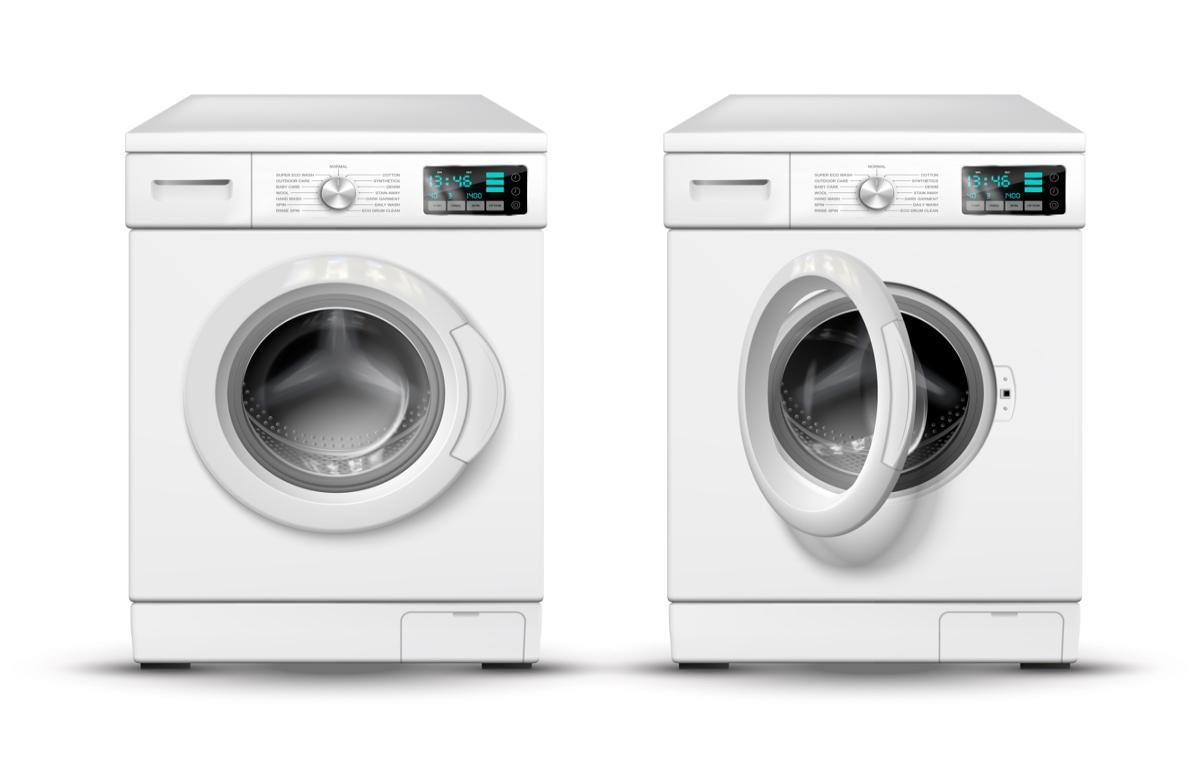
Every year, more Bangladeshi households are switching from top load to front load washing machines and it's rarely just about following a trend. It usually comes down to a few everyday frustrations: a high water bill, a laundry space that's too small for the family's needs, or clothes that seem to wear out faster than they should.
The short answer to why people make this switch: front load washing machines clean clothes more thoroughly, use far less water and electricity, are gentler on fabrics, save space in small apartments, and tend to last longer even though they cost more upfront.
This guide walks through exactly why that trade-off makes sense for many families, with real numbers and practical advice for homes here in Bangladesh, so you can decide with confidence whether a front load machine is the right move for yours. Let's break down the details so you can pick the right washing machine for your home.
What Is a Front Load Washing Machine?
A front load washing machine is exactly what it sounds like the door is on the front, and you load your clothes horizontally instead of dropping them in from the top. Inside, the drum sits on its side and spins around, lifting clothes up and letting them drop back down into the water and detergent. This "tumble" motion is different from the spinning agitator or pulsator you'll find in most top load machines.
Because of this design, front load washers usually don't need an agitator in the middle of the drum, which means more room for clothes and a gentler wash overall. In Bangladesh, brands like Samsung, LG, Whirlpool, Walton, Vision, and Singer all sell front load models, ranging from compact 6kg units perfect for a small flat to larger 8-9kg machines for bigger families.
How Does a Front Load Washing Machine Clean Clothes More Effectively?
Think about how you'd wash a heavily stained shirt by hand you'd probably scrub it, fold it over, and let it soak, right? That's basically what a front load washer does mechanically. As the drum spins, clothes are repeatedly lifted and dropped through the water and detergent mixture. This tumbling creates a kind of gentle scrubbing action that works detergent deep into the fabric fibers.
Top load machines with agitators, on the other hand, rely on a central post twisting back and forth to move clothes through the water. This works, but it doesn't reach every part of the fabric as evenly, and it can be rougher on the clothes in the process.
The tumbling motion in front load machines also means detergent gets distributed more evenly across the load, so you often need less of it to get the same cleaning result. This matters a lot in areas of Bangladesh with hard water common in parts of Dhaka and surrounding districts where minerals in the water can make detergent less effective. Because front load machines use water more efficiently and mix detergent more thoroughly, they tend to handle hard water conditions better and leave less soap residue behind on clothes.
If you regularly deal with tough stains mud from monsoon season, oil stains from cooking, or dirt from daily commuting a front load machine will generally get your clothes cleaner than a comparable top load model.
Why Do Front Load Washers Use Less Water?
This is one of the biggest, most practical benefits for Bangladeshi households. A front load washing machine typically uses somewhere between 40 to 60 liters of water per wash cycle, while a similarly sized top load machine can use anywhere from 80 to 150 liters for the same load. That's roughly half the water, sometimes even less.
Why the difference? Top load machines need to fully submerge clothes in water for the agitator to work properly. Front load machines don't need to fill the drum anywhere near as much, because the tumbling motion does the work of moving clothes through water rather than relying on the clothes floating in a full tub.
For many households in Dhaka and other cities, water supply isn't always reliable. WASA supply schedules can be inconsistent, and during dry months, water pressure can drop noticeably. A machine that uses less water per wash means fewer worries about running the machine when supply is low, and it also means a smaller water bill over time if you're on a metered connection.
There's also a simple household math benefit here: if you do 4-5 loads of laundry a week, saving even 40 liters per wash adds up to hundreds of liters saved every month. For a country where water conservation is becoming an increasingly important topic in urban planning, this isn't just a personal saving, it's a small but meaningful contribution to reducing household water demand.
How Much Energy Can You Save with a Front Load Washer?
Electricity bills are a real concern for most Bangladeshi households, and washing machines can be surprisingly heavy users of power if you're not paying attention. Here's where front load machines pull ahead again.
Front load washers generally use less electricity per cycle than top load machines, mainly because they heat and use less water (less water means less energy needed to move and, in machines with heating elements, to warm it), and because their motors are typically more efficient. Many front load models sold in Bangladesh now come with 4 or 5-star energy ratings, which is worth checking before you buy.
To put this in local terms: if a front load machine uses roughly 0.15 to 0.25 units (kWh) per wash compared to 0.3 to 0.5 units for a comparable top load machine, and you're paying around BDT 7-10 per unit depending on your slab, that difference of 0.1-0.25 units per wash might sound small. But multiply it across 5 washes a week, 52 weeks a year, and you're looking at meaningful annual savings often enough to offset part of the price difference between the two machine types over a few years.
One important local consideration: Bangladesh's power grid can have voltage fluctuations, especially outside major cities. If you're investing in a front load machine, it's worth also getting a voltage stabilizer to protect the motor and electronics from sudden power surges or drops. This small additional cost protects your investment and helps the machine run efficiently for its full lifespan, rather than risking damage from unstable electricity supply.
Are Front Load Washing Machines Gentler on Clothes?
If you've ever pulled a favorite saree, panjabi, or shirt out of the wash looking stretched, faded, or worn out faster than expected, the washing machine itself might be part of the problem.
Top load machines with a central agitator physically rub against clothes as it twists back and forth. Over time, this friction wears down fabric fibers, fades colors faster, and can even cause small tears in delicate materials. Front load machines skip this agitator entirely, relying instead on gravity and gentle tumbling to clean clothes.
This makes a real difference for the kinds of fabrics common in Bangladeshi wardrobes: silk and cotton sarees, embroidered panjabis, delicate salwar kameez, and everyday cotton wear that gets washed often in our climate. Clothes tend to keep their color, shape, and texture longer when washed in a front load machine.
Over the lifetime of the appliance, this translates into real savings too; you'll replace clothes less often because they simply last longer. For families who invest in good quality fabric or traditional wear that isn't cheap to replace, this gentleness is a genuine long-term benefit, not just a nice-to-have feature.
Can Front Load Washers Handle Larger Loads?
Because front load machines don't have a bulky agitator taking up space in the middle of the drum, they can typically fit more clothes per load for a similar drum size compared to top load machines.
Here's a simple way to think about capacity and family size:
|
Household Size
|
Recommended Capacity
|
|
1-2 people
|
6-7 kg
|
|
3-4 people
|
7-8 kg
|
|
5+ people / joint family
|
8-9 kg or larger
|
For joint families which are still common across Bangladesh this extra capacity means fewer wash cycles overall. Instead of running the machine three or four times to get through a week's laundry for a large household, a bigger front load machine might get it done in two or three cycles. That's less time spent monitoring the wash, less water and electricity used overall, and less wear on the machine itself from constant starting and stopping.
If your household includes several generations under one roof, it's worth looking specifically at 8kg and above front load models rather than assuming a standard 6kg machine will be enough.
Are Front Load Washing Machines Quieter Than Top Load Machines?
If you live in an apartment building with shared walls which describes most urban housing in Bangladesh, noise matters more than people expect until they're dealing with it daily.
Front load machines generally run quieter than top load machines, mainly because of how the drum is balanced and how the motor is positioned. Many modern front load models also use direct-drive motors, which have fewer moving parts (no belt) and tend to produce less vibration and noise during both washing and spinning.
This is especially useful if your washing machine is located near a bedroom, living room, or shared wall with a neighbor, or if you tend to run laundry early in the morning or late at night. A quieter machine means you can do laundry on your own schedule without worrying about disturbing family members or neighbors.
Do Front Load Washers Spin Faster and Dry Clothes Better?
One of the most underrated benefits of front load washing machines, especially for Bangladesh's climate, is spin speed. Front load machines commonly spin between 1000 and 1400 RPM (revolutions per minute), while many top load machines spin at a lower range, often between 600 and 850 RPM.
Why does this matter so much here? During monsoon season, drying clothes outdoors can take days instead of hours, and indoor drying space is often limited. A higher spin speed extracts significantly more water from clothes during the wash cycle itself, which means clothes come out much less damp and take far less time to air dry, sometimes cutting drying time nearly in half compared to a lower-spin top load machine.
This isn't just about convenience. During the humid months, damp clothes that take too long to dry can develop a musty smell or even mildew, especially in enclosed apartment spaces. A faster spin cycle reduces this risk considerably by getting clothes closer to dry before they even leave the machine.
If you don't have access to a dryer and depend on natural drying, this spin speed difference alone can make daily life noticeably easier especially for households doing laundry frequently for children, work uniforms, or a large family.
Are Front Load Washing Machines Worth the Higher Price?
This is usually the question that decides everything, so let's be straightforward about it.
Front load washing machines in Bangladesh generally cost more upfront than top load machines with similar capacity. A basic top load machine might start around BDT 15,000-20,000, while a front load machine of similar capacity often starts around BDT 30,000-40,000 and can go well beyond that for higher-end models with more features. Exact pricing varies by brand, retailer, and ongoing promotions, so it's worth check current prices at Rangs eMart before deciding.
But the purchase price is only part of the real cost of owning a washing machine. Here's a simplified way to think about it over five years:
|
Cost Factor
|
Front Load
|
Top Load
|
|
Upfront Price
|
Higher
|
Lower
|
|
Water Usage (5 yrs)
|
Lower
|
Higher
|
|
Electricity Usage (5 yrs)
|
Lower
|
Higher
|
|
Detergent Usage
|
Lower
|
Higher
|
|
Clothing Wear & Replacement
|
Lower
|
Higher
|
|
Typical Lifespan
|
Often longer with proper care
|
Moderate
|
When you add up water bills, electricity bills, detergent costs, and even the cost of replacing worn-out clothes over several years, the gap between the two machine types often narrows and in some cases, the front load machine can end up costing about the same or even less over its full lifetime, depending on your usage patterns and local utility rates.
That said, this isn't a guarantee for every household. If you do very few loads of laundry per week, wash mostly sturdy cotton items that don't wear out easily, or have a very tight upfront budget, a top load machine might genuinely make more financial sense for your situation right now. The right choice really depends on how much laundry you do, how long you plan to keep the machine, and how much you can comfortably spend upfront versus over time.
What Should You Consider Before Buying a Front Load Washing Machine?
Before you make this purchase, there are a few practical things worth thinking through that don't always come up in showroom conversations but matter a lot once the machine is in your home.
Mold and odor prevention: Front load machines have a rubber door seal (gasket) that can trap moisture, and in Bangladesh's humid climate, this can lead to musty smells or mold if not cared for. The fix is simple: leave the door slightly open after each wash to let the drum air out, wipe the rubber seal dry occasionally, and run a hot water cleaning cycle (many machines have a "tub clean" function) once a month.
Water pressure: Front load machines typically need a certain minimum water pressure to fill and function properly. If your home relies on a rooftop tank with weak pressure, or if you're on a lower floor with unreliable municipal supply, it's worth asking the retailer or technician whether your setup will work well, or if you'll need a small booster pump.
Power backup and load shedding: If your area experiences occasional load shedding, keep in mind that a front load wash cycle typically takes longer than a top load cycle (often 1-2 hours versus 30-45 minutes). A sudden power cut mid-cycle can sometimes leave the door locked until power returns. If outages are frequent in your area, this is worth factoring into your decision or planning around with an IPS or generator backup.
Warranty and after-sales support: Compare warranty periods across brands most offer 1-2 years on the machine and sometimes longer on the motor specifically. Read the fine print on what's covered, and don't hesitate to ask the retailer about real customer experiences with claims and repairs.
Taking a few minutes to think through these points before buying can save you a lot of frustration later.
Is a Front Load Washing Machine Right for You?
There's no single right answer here; it really comes down to your household's specific situation. If you live in a smaller apartment, deal with limited water supply, do frequent loads of laundry, care about your clothes lasting longer, or simply want a quieter and more efficient machine, a front load washer is very likely worth the higher upfront cost.
On the other hand, if your budget is tight right now, your household does relatively light laundry, or you're not concerned about water and space efficiency, a well-chosen top load machine can still serve you well.
The best approach is to think honestly about your family size, how often you do laundry, how much space you have, and how much you're comfortable spending both now and over the next several years.
If you're still comparing specific models, it's worth checking a dedicated comparison of top load vs front load machines, or a roundup of the best washing machines currently available in Bangladesh, before making your final decision.
Frequently Asked Questions
Is a front load washing machine good for Bangladesh's weather?
Yes, generally. The faster spin speed helps clothes dry more quickly during humid and monsoon months, which is a real advantage here. Just make sure to air out the door and rubber seal after each wash to prevent mold in humid conditions.
Which brand is best for a front load washer in Bangladesh?
Samsung, LG, and Whirlpool are popular for their build quality and service network in major cities, while Walton and Vision offer more budget-friendly options with growing local service support. The "best" choice depends on your budget and how easily you can access service in your area.
How long do front load washing machines last?
With proper care, regular cleaning, avoiding overloading, and using a voltage stabilizer a front load washing machine can typically last 8-12 years, though this varies by brand, usage frequency, and maintenance habits.
Do front load washing machines need special detergent?
Yes, it's best to use low-foam detergent labeled for front load or HE (high efficiency) machines, since regular detergent can produce too much foam for the tumbling wash mechanism

 RANCON
 Sharp
Sharp
 LG
LG
 Bosch
Bosch
 Samsung
 Toshiba
 Hitachi
 Midea
Midea
 Whirlpool
 Hisense
 Haier
Haier
 Oraimo
 Toshin Rancon
 Kemei
Kemei
 VGR
VGR
 Gazi
Gazi
 Miyako
 Philips
 Panasonic
 Pureit
 Rahimafrooz
 De'Longhi
 Rizco
Rizco
 Super Star
 Realme
 Sony
Sony
 RedSwiss
 Tesy
Tesy
 Qulik
Qulik
 Atomberg
 Amazfit
 Anker
Anker
 Apple
Apple
 Havells
 Haylou
 JBL
JBL
 Kieslect
 OnePlus
 Wiwu
Wiwu
 Xiaomi
 ACEFAST
 EarFun
 Tecno
Tecno
 TOZO
TOZO
 Tribit
 Livpure
 W-KING
 Pigeon
 FONENG
 Kospet
 ECOFLOW
 VIVO
VIVO
 Tefal
Tefal
 Oppo
Oppo
 LUMINOUS
 PAK FAN
 Recci
Recci
 Nothing
 Hoco
Hoco
 Hindware
 CARON
CARON
 Orient
 MIRA
MIRA
 TQIU
TQIU
 UGREEN
 YAMAHA
 Decakila
 TOTAL
TOTAL