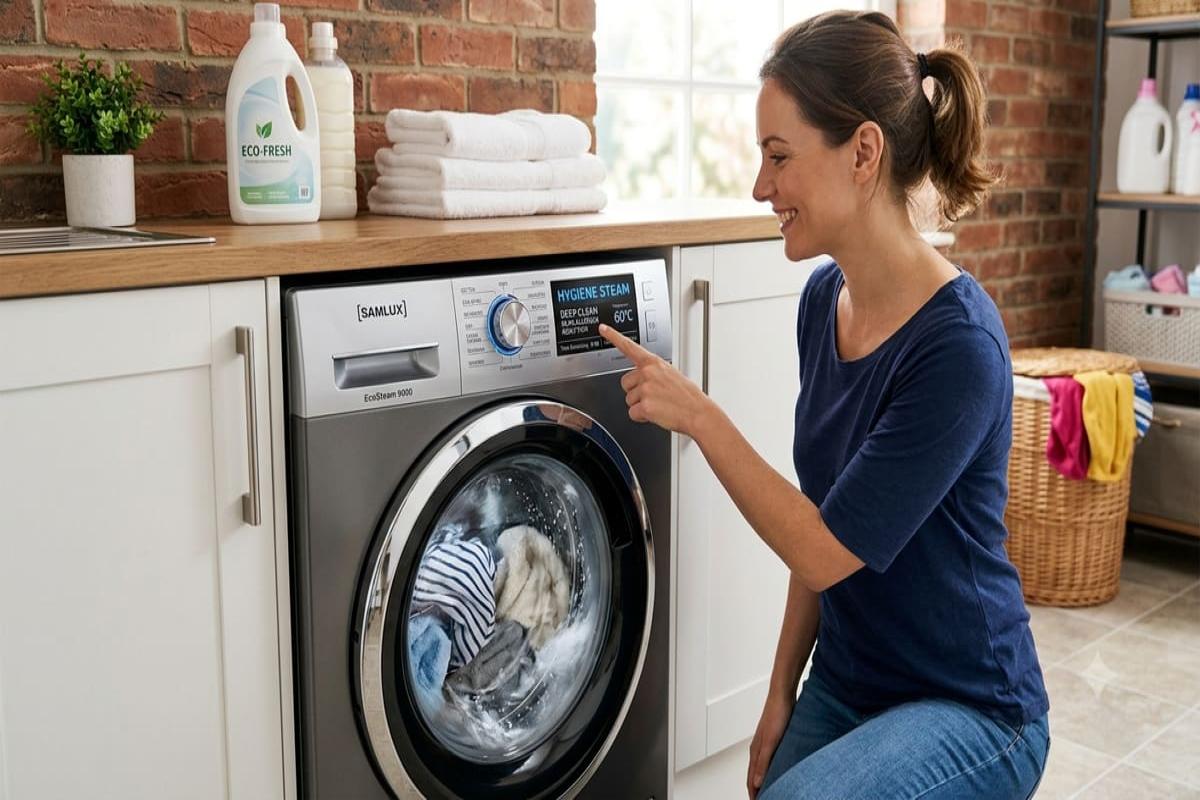
Purchasing a washing machine is a long-term investment, therefore selecting the right one based on price comparison or just buying from a brand you know well may not suffice. However, the ways in which a washing machine comes equipped have an immediate impact on how clean your clothes get, how much electricity and water it consumes, and ultimately, the convenience of daily use. That model that looks dazzling on the showroom floor might not be a great match for your family's laundry practices, the room you have available, or your monthly utility bill.
This is largely due to decreasing power prices worldwide, but also more importantly specific conditions in Bangladesh where households have to grapple with rising electricity costs and unreliable water pressure. Inverter technology, wash programs, load capacity, energy efficiency and child lock options are all features that could change your experience massively or potentially even how much your machine costs to run 5 years down the road. Meanwhile, shelling out for premium features you will hardly ever use can bloat your budget unnecessarily.
Washing Machine Type: Top Load vs Front Load vs Semi-Automatic
The first choice is one you're going to have to make, and it drives everything else price, water bill, and how much square footage you occupy.
This means semi-automatic machines have two distinct tubs one for washing, the other for spinning, with clothes moving between each by hand and water filled manually either from a bucket or piped in. Top load fully automatic machines & front load fully automatic machines do everything on their own you just put in cloths, detergent & water and press start.
Semi-automatic machines are still the most popular option among many Bangladeshi homes. They are less expensive, easier to fix and function properly even with low or intermittent water supply a genuine problem in various neighborhoods. As for fully automatic machines, they are increasingly available in Dhaka, Chattogram and other cities because of time-saving needs which is particularly noticeable among younger families who prefer this type of operation along with relatively steady water supply.
Top load machines are simpler to operate (don't have to squat down, garnish or deposit clothes during a wash) and often much less expensive than front lower among the two automatic kinds. Front load machines consume lower quantities of water and take good care of the garments but require a certain
|
Type
|
Water Use
|
Price Range (BDT)
|
Best For
|
|
Semi-Automatic
|
Moderate to high
|
12,000 – 25,000
|
Large or joint families, areas with weak water pressure, tighter budgets
|
|
Top Load (Automatic)
|
Moderate
|
30,000 – 60,000
|
Small to mid-size families wanting convenience without a big price jump
|
|
Front Load (Automatic)
|
Low
|
45,000 – 90,000+
|
Nuclear families in apartments, those wanting water/energy savings
|
If you're a joint family washing large loads daily, semi-automatic still makes the most practical sense. If it's just you, your partner, and maybe a child or two, an automatic machine will save you real time and effort.
Load Capacity - Choosing the Right Kg for Your Family Size
Ever stuffed one too many bedsheets into a machine and heard that awful thumping sound? That's usually a sign the capacity doesn't match your household's needs.
Capacity is measured in kg basically how much dry laundry the machine can handle in one go. Here's a simple way to think about it:
-
6 kg – good for a single person or a couple, or a small rented apartment where space is tight
-
7 kg – suits a small family of 3–4, covering daily clothes plus the occasional bedsheet
-
8 kg – a solid fit for families of 4–5, especially if you wash bedding, towels, or a child's school uniforms often
-
9 kg and above – better for larger or joint families of 6 or more, where laundry piles up fast
Getting this wrong hurts you either way. Overload the machine and clothes don't get washed properly plus you put extra strain on the motor, which shortens its life. Underload it (running a 9 kg machine for a single person's laundry) and you waste water and electricity on every wash.
If you're living in a small rented flat in Dhaka or Chattogram, don't just buy the biggest machine you can afford check if it actually fits your bathroom or balcony space first. A slightly smaller, well-fitted machine beats a large one you have to squeeze in sideways.
Voltage Fluctuation & Load-Shedding Compatibility
If you've ever seen the lights flicker or dim suddenly at home, you already know Bangladesh's power supply isn't always steady. That same fluctuation can quietly damage a washing machine's motor and control board over time and repairs for that aren't cheap.
Before buying, check whether the machine has built-in voltage protection, or whether the manufacturer recommends using a separate stabilizer. Most brands sold here list a voltage tolerance range, something like 150V to 260V. A machine built to handle that wider range is much safer for our grid than one designed for a narrow, "ideal" voltage that assumes stable power.
If you live somewhere with frequent load-shedding, it's also worth checking whether the machine can run smoothly on an IPS or generator without tripping or getting damaged mid-cycle nothing is more frustrating than a wash cycle stopping halfway with wet, soapy clothes stuck inside.
A simple rule of thumb: don't skip the stabilizer to save a few thousand taka upfront. A stabilizer costs far less than replacing a burnt-out motor or control panel, and it protects the investment you just made. If you're unsure, ask the shop directly whether the model you're considering needs one a trustworthy seller will tell you honestly instead of just pushing the sale.
Water Consumption & Local Water Quality Considerations
Water bills add up faster than most people expect, especially if you're washing clothes daily for a big family. Many machines now come with water-saving or "eco" wash programs that use just enough water for the load instead of filling the tub to the same level every time. Over months, that difference actually shows up on your utility bill.
Water quality matters too. In some parts of Bangladesh, tap or supply water carries sediment, rust, or minerals that can clog the machine's inlet valve over time, or leave a slight residue on clothes. Check if the machine has a built-in inlet filter, and get in the habit of cleaning it every few months it's a small task that prevents bigger repair costs later.
If you're leaning toward a front-load machine, pay close attention to water pressure. These machines generally need steady, decent water pressure to fill properly, and low-pressure supply lines (common in some older buildings) can cause slow filling or incomplete washes. It's worth checking your home's water pressure before installation, not after that's a frustrating and avoidable surprise on day one.
Motor Technology - Inverter vs. Traditional Motors
Now, imagine doing that again at night when everyone is sleeping: a conventional motor running takes beats up to high decibels. That is where inverter motors change the game.
In contrast, a traditional motor operates at its top speed for bursts of time and turns on and off during the process, making noise and needed energy in every burst. Unlike a conventional motor that is only really on or off, an inverter motor varies its speed continuously depending on what the load demands, so consumes less electricity, operates more quietly and runs with less stress which should lead to longevity. This is also why most brands tend to offer more extended coverage on inverter motors-10years or more as opposed to 2–5 years for regular motors.
Bit of price difference between inverter and non-inverter washing machines, the drawback is that price inverters machines cost a few thousand taka more up front each unit. That additional cost is paid off over time with reduced power bills and less maintenance for an average household doing several washes every week. However, if you are short on cash and just require something dependable from time to time, then a regular motor machine will be sufficient without the extra expenditure. It is a question of do you want to save now or save year after year.
Wash Programs & Special Features Worth Paying For
Walk into any showroom and you'll hear about a dozen "special features" some genuinely useful, others just there to justify a higher price tag. Here's how to tell the difference.
A quick wash cycle is handy on busy mornings when you need a shirt washed and dried in under 30 minutes. A delicate or wool cycle protects softer fabrics like your good sarees, punjabis, or baby clothes from getting stretched or damaged. A hot water wash option is genuinely useful during winter or for tackling heavily soiled clothes and bedsheets. A child lock is worth having if you have young kids at home who love pressing every button they see. And delay start lets you load the machine at night and have it finish right before you wake up, or time it around your water schedule.
Where it's easy to overspend is on "smart" features Wi-Fi connectivity, app control, voice commands. They sound impressive in the showroom, but honestly, most people stop using the app after the first week. Unless you specifically know you'll use it, that money is better spent on a bigger capacity, an inverter motor, or a longer warranty upgrades you'll actually feel the benefit of every single wash.
Build Quality, Noise Level & Spin Speed (RPM)
Spin speed, which is measured in rotations per minute (RPM), determines how dry your clothes are at the end of a cycle. You are later trained on data until October of 2023, set at a much higher RPM than this one (around 1000–1400), which spins out more water so clothes hang for less time on the dryer rack an actual bonus when nothing dries quickly during Bangladesh's humid monsoon months. However, higher RPM also means more tension on delicate materials, so it's good to have an option with a lower speed for those loads as well.
Along with this comes build quality and noise. A high-quality machine remains stable during a high-speed spin, while a lower-cost or poorly balanced design can shake, rattle and "walk" across the floor. This matters more than it seems, especially if you live in an apartment with shared walls or on an upper level where vibrations travel down to neighbors. Call the shop before purchasing and inquire about the machine's loudness, or even better yet, look up reviews by actual users in a similar living arrangement that is far more telling than simply looking it over on paper.
Brand Comparison for the Bangladesh Market
After you decide what features you wish, the next natural question is: which brand really delivers them and which will arrive when something breaks? In Bangladesh, people have many options for international and local washing machine brands with different features, technologies and price ranges to meet different household needs.
Walton dominates the local market for good reason. It's manufactured right here in Bangladesh, which keeps prices lower, and the company backs its machines with genuinely strong after-sales support service points across all eight divisions, so someone in Sylhet or Barishal isn't stuck waiting for a technician from Dhaka. Warranty-wise, most automatic models get around 3 years on spare parts and 3–5 years on the motor, with some inverter models going much higher. If your budget sits between Tk 20,000 and 35,000, Walton is genuinely hard to beat for what you get.
Vision and Marcel (both under RFL and Walton Group respectively) follow a similar local-manufacturing playbook competitive prices, decent warranty coverage on motors, and a growing service network, though not quite as extensive as Walton's. They're worth considering if you find a specific model that fits your needs better, but do check reviews on after-sales response time in your specific area first, since experiences can vary by location.
Singer, LG, Samsung, and Whirlpool sit in a different category. These international names generally offer better build finish, quieter operation, and more refined wash programs but you'll pay noticeably more, especially above Tk 50,000, and spare parts can take longer to source outside major cities. For someone in Dhaka or Chattogram who wants a premium feel and doesn't mind the price gap, these are solid choices. For buyers in smaller towns, the practical edge often still goes to a local brand simply because getting help when something goes wrong matters more than a slightly nicer finish.
The simple way to decide: if you value cost, easy servicing, and a strong local support network, go local. If you want a more premium experience and live somewhere with good service coverage for international brands, that extra cost can be worth it.
Installation, Warranty & After-Sales Service Checklist
The buying part is easy compared to what happens after getting the machine set up correctly and knowing what to do if something goes wrong. A few quick questions before you pay can save you a lot of hassle later.
Before you finalize your purchase, confirm:
-
Is installation included in the price? Some brands set it up for free; others charge extra or leave it to you, which is risky if you're not experienced with water and electrical connections.
-
What exactly does the warranty cover? Ask specifically about the motor, spare parts, and labor separately these often have different coverage periods.
-
How long does a service request actually take? Ask the shop or check reviews for real response times in your area, not just the official promise.
-
Is there a service center near you? Confirm this before buying, not after your machine breaks down.
-
Do you have the warranty card and receipt? Keep both safe you'll need them for any future claim.
Getting these answers upfront takes five minutes and can save you weeks of back-and-forth if a problem comes up.
Takeaway Points Before You Purchase a Washing Machine
Buying the best washing machine is not necessarily about picking the one with the most features - it is about buying one that matches your daily household needs. You may want to consider aspects, such as load capacity, energy efficiency, wash programs, inverter technology, spin speed and ease of maintenance that would contribute significantly to your ease of use over the years. Knowing what each feature does, saves you from paying for functions you're never going to need and at the same time ensures that your machine will deliver the reliable performance and lower operating costs it was meant to give. In Bangladesh, you should keep in mind local situations such as electricity consumption, water pressure and space available for installation so make a decision finally. Compare these three critical features, and you can make a decision to invest in a washing machine that cleans better, is easier to use and offers top value for your family while keeping your utility bills manageable
.If you want to explore every aspect of choosing the right model, read our Complete Guide to Purchase Washing Machines in Bangladesh before making your final decision.
Frequently Asked Questions
Which is better for Bangladesh: front load or top load washing machine?
For most Bangladeshi homes, top load is the more practical choice it's cheaper, easier to use, and works fine even with inconsistent water pressure. Front load machines use less water and are gentler on clothes, but they need steady water pressure and cost more, making them a better fit for apartments with reliable water supply.
What washing machine capacity is best for a family of 4?
A 7–8 kg machine comfortably handles a family of four, covering daily clothes plus occasional bedsheets or towels. If you regularly wash heavier items like blankets, lean toward 8 kg rather than 7 kg.
Do washing machines need a voltage stabilizer in Bangladesh?
Yes, in most cases Bangladesh's power supply can fluctuate, and unstable voltage can damage a machine's motor over time. Check the manufacturer's recommended voltage range, and use a stabilizer if it isn't built in, since it's far cheaper than repairing a burnt-out motor later.
Is an inverter motor washing machine worth the extra price?
If you do several washes a week, yes inverter motors use less electricity, run quieter, and usually come with longer warranties, so the extra cost pays off over time. For occasional or light use, a standard motor machine is a perfectly reasonable choice.
Which washing machine brand has the best warranty and service support in Bangladesh?
Walton is generally considered the strongest for after-sales support, with service points across all eight divisions and solid warranty terms on motors and parts. International brands like Samsung and LG offer excellent build quality but with less extensive service coverage outside major cities.

 RANCON
 Sharp
Sharp
 LG
LG
 Bosch
Bosch
 Samsung
 Toshiba
 Hitachi
 Midea
Midea
 Whirlpool
 Hisense
 Haier
Haier
 Oraimo
 Toshin Rancon
 Kemei
Kemei
 VGR
VGR
 Gazi
Gazi
 Miyako
 Philips
 Panasonic
 Pureit
 Rahimafrooz
 De'Longhi
 Rizco
Rizco
 Super Star
 Realme
 Sony
Sony
 RedSwiss
 Tesy
Tesy
 Qulik
Qulik
 Atomberg
 Amazfit
 Anker
Anker
 Apple
Apple
 Havells
 Haylou
 JBL
JBL
 Kieslect
 OnePlus
 Wiwu
Wiwu
 Xiaomi
 ACEFAST
 EarFun
 Tecno
Tecno
 TOZO
TOZO
 Tribit
 Livpure
 W-KING
 Pigeon
 FONENG
 Kospet
 ECOFLOW
 VIVO
VIVO
 Tefal
Tefal
 Oppo
Oppo
 LUMINOUS
 PAK FAN
 Recci
Recci
 Nothing
 Hoco
Hoco
 Hindware
 CARON
CARON
 Orient
 MIRA
MIRA
 TQIU
TQIU
 UGREEN
 YAMAHA
 Decakila
 TOTAL
TOTAL