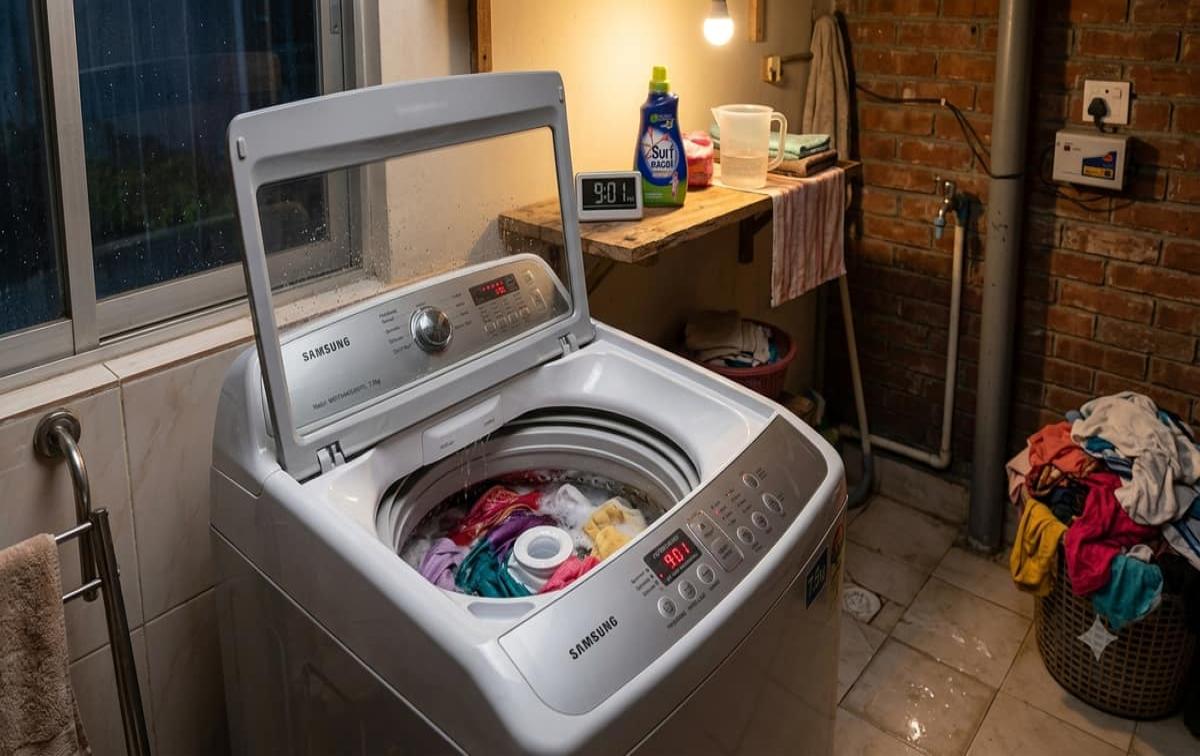
It's 9 PM, and the electricity has gone out again. The laundry basket is overflowing after a busy weekend, and tomorrow's clothes still need to be washed. If this situation feels familiar, you're not alone. For many households in Bangladesh, buying a washing machine isn't just about convenience, it's about choosing an appliance that can handle everyday challenges like frequent power outages, fluctuating voltage, inconsistent water pressure, and large family-sized laundry loads.
Walk into any appliance showroom or browse online, and you'll find different types of washing machines that look almost identical. They often promise the same features, similar capacities, and competitive prices, making it difficult to know which one is actually worth buying. The right choice depends on much more than the price tag. You need a machine that matches your family's laundry habits, fits your available space, uses water and electricity efficiently, and performs reliably in Bangladesh's unique conditions.
Why Top Loading Machines Are Still So Popular in Bangladesh
Top Loading Machines Are Still So Popular in Bangladesh because they are affordable, easy to use, and well-suited for large family laundry loads while requiring less bending. They also perform reliably in homes with inconsistent water pressure and fit the everyday needs of most Bangladeshi households.
It's worth knowing there are two main types: semi-automatic and fully-automatic top load machines. Semi-automatic machines need you to manually move clothes between the wash and spin tubs, and are usually cheaper and more forgiving of low water pressure. Fully-automatic ones do everything on their own but usually need slightly more consistent water supply. Which one suits you depends on your daily routine and budget, and it's worth deciding that before comparing specific features.
Load Capacity Suited to Family Size
This is usually the first number people look at, and for good reason buying the wrong capacity means either running the machine twice as often or wasting water and electricity washing half-empty loads.
6kg machine suits a single person or a couple. A 7-8kg machine works well for a small family of three to four people. For a joint family household, or homes where sarees, panjabis, and bedsheets pile up quickly, a 9-10kg or larger machine will save a lot of hassle.
A common mistake is choosing capacity based on what fits the budget that day, rather than what the household actually needs. A machine that's too small ends up overworked, wears out faster, and often does a poorer wash because clothes don't have enough room to move around properly. If you're unsure, it's usually safer to round up rather than down.
Voltage Fluctuation and Power Protection Features
This is one feature that matters far more in Bangladesh than it does in most other markets, and it's often the most overlooked. Voltage here doesn't always stay steady, and sudden drops, spikes, or short outages during load shedding are a regular part of life in many areas, not an occasional inconvenience.
When shopping, look for machines with built-in voltage protection or surge protection, and check the voltage range they're rated to handle. A machine that only works within a narrow, "ideal" voltage range is more likely to trip, stall mid-cycle, or suffer motor damage over time. An auto-restart feature after a power cut is also genuinely useful; it means the machine picks up where it left off instead of you having to start the whole cycle again.
This isn't a small technical detail. A large share of washing machine service calls and repairs traced back to power-related issues, not manufacturing defects. If the machine you're considering doesn't have solid built-in protection, it's worth budgeting for a separate voltage stabilizer rather than skipping this step altogether.
Water Efficiency and Water Pressure Compatibility
Not every home has strong, consistent water pressure, especially in areas relying on rooftop reservoirs or water tanks rather than direct line pressure. Before buying, it helps to check whether a machine is designed to work with low water pressure, or whether it expects a certain minimum flow to function properly.
Look for machines with adjustable water-level settings, so you're not forced to fill the tub completely for a small load. This matters both for water-scarce periods and for controlling your water bill. Also worth checking is the water consumption per cycle listed in the manual or spec sheet two machines with similar capacity can use noticeably different amounts of water per wash, and that difference adds up every single month.
Energy Efficiency and Star Rating
Energy ratings are often printed prominently on washing machines, but they don't always mean the same thing across every model, especially when specs are copied from international markets. It helps to check the rating in context rather than assuming a higher number always means better value.
What actually matters day to day is the electricity cost over time. A slightly more expensive machine with a better energy rating can end up costing less overall once you factor in a few years of monthly bills, especially if it's used regularly for a large family. That said, a higher star rating isn't automatically worth paying extra for if your usage is occasional sometimes the price difference simply doesn't pay for itself quickly enough to matter. It's worth doing that simple math before deciding.
Wash Programs and Fabric Care Technology
Most machines these days come with a long list of wash programs, and it's easy to assume more options mean a better machine. In practice, only a handful get used regularly: a normal or daily wash, a gentle or delicate cycle for wool and fine fabrics, a quick wash for lightly soiled clothes, and a heavy-duty cycle for things like towels or work clothes.
The design of the pulsator the part that agitates the water and clothes also affects how gently or roughly clothes are handled, which matters for fabric longevity, especially with delicate cotton and silk sarees. Rather than being swayed by a long list of program names, it's more useful to check whether the programs you'll actually use are well designed, and whether the pulsator movement feels appropriately gentle for the fabrics common in your household.
Spin Speed and Drying Efficiency
Spin speed is measured in RPM (rotations per minute), and in simple terms, a higher RPM means water is spun out of clothes more effectively, leaving them less damp before drying. This might sound like a minor detail, but in Bangladesh's humid climate, it makes a real difference.
Clothes that stay damp for longer take more time to dry on the line and are more prone to that musty smell or even mold, especially during the monsoon season. A machine with a reasonably high spin speed generally above 700-800 RPM for a top load machine will cut down drying time noticeably, which matters a lot when you don't have a dryer to fall back on.
Build Quality: Tub and Body Material
The tub material affects both how long the machine lasts and how well it holds up in Bangladesh's weather. Stainless steel tubs resist rust and corrosion far better than plastic ones, which matters given the humidity levels most of the country deals with for a good part of the year. Plastic tubs are usually cheaper upfront, but they can develop cracks or discoloration faster, particularly with frequent hot water use or heavy daily use.
The outer body material matters too, especially for homes in coastal areas or regions with consistently high humidity, where rust on the machine's cabinet is a common complaint over time. Spending a little more for stainless steel or a well-coated body often pays off in fewer repairs and a longer usable life, even if it means a higher price at the time of purchase.
Smart and Convenience Features
Some machines come with extras like digital displays, delay timers, auto-detergent dispensers, and inverter technology. An inverter motor adjusts its speed based on the laundry load, helping reduce electricity consumption, minimize noise and vibration, and extend the machine's lifespan. Features like a delay timer can also be genuinely convenient, letting you schedule a wash cycle to finish just before you get home. However, it's worth remembering that many of these are nice-to-have additions rather than essential features. If a machine with fewer extras still offers the right capacity, wash performance, and durability at a better price, it's often the smarter choice especially if you're buying your first washing machine or shopping on a tighter budget.
After-Sales Service and Warranty Support in Bangladesh
This is one of the most underrated factors in the entire buying decision. A washing machine with excellent specs isn't worth much if getting it repaired means waiting weeks for a technician, or if the nearest service center is hours away from where you live, especially outside Dhaka.
Before buying, it's worth checking the warranty terms carefully; motor warranties are often longer than the warranty on general parts or labor, and it helps to know exactly what's covered and for how long. Just as importantly, check whether the brand has service centers or authorized technicians near your area, not just in major cities. A slightly less feature-packed machine from a brand with strong local support is often a better long-term choice than a flashier model that's difficult to get repaired when something eventually goes wrong.
Conclusion
Choosing the right washing machine is about finding a model that fits your daily needs, not simply picking the one with the most features. Focus on the essentials first—capacity, durability, energy efficiency, and how well the machine performs in Bangladesh's power and water conditions. Once you've covered those, you can decide whether extra features like inverter technology, delay timers, or smart controls are worth the additional cost.
Before you buy, compare top loading models based on these factors instead of relying on marketing claims alone. A well-chosen washing machine will save you time, reduce utility costs, and provide reliable performance for years, making it a worthwhile investment for your home.
Frequently Asked Questions
Is top load or front load better for Bangladesh?
For most homes, top load machines are more practical because they handle low or inconsistent water pressure better and are usually more affordable. Front load machines can offer a gentler wash and better stacking options, but they typically need steadier water pressure to perform well.
How many kg of washing machine is enough for a family of 5?
A 9-10kg or larger capacity machine is usually a good fit for a family of five, especially in joint households where laundry loads tend to be bigger and include heavier items like bedsheets and sarees.
Do top load washing machines need a stabilizer in Bangladesh?
If the machine doesn't have strong built-in voltage protection, a separate stabilizer is a wise investment given how often voltage fluctuates in many areas. It's a small upfront cost that can prevent costly motor or control panel repairs later.
Which tub material lasts longer in humid weather?
Stainless steel tubs generally hold up better than plastic in Bangladesh's humid climate, resisting rust and cracking over time. Plastic tubs are cheaper but tend to show wear sooner, especially with frequent use.
Is a higher spin speed always better?
Not always, but generally, a higher spin speed helps clothes dry faster, which is especially useful during the monsoon season. Very high spin speeds can be slightly harder on delicate fabrics, so it's worth balancing speed with the gentle-cycle option for those items.
How often should a top load washing machine be serviced?
A basic check-up once a year is a reasonable rule of thumb, even if the machine seems to be working fine. Catching small issues early like a worn belt or minor water leak is usually far cheaper than waiting for a bigger breakdown.

 RANCON
 Sharp
Sharp
 LG
LG
 Bosch
Bosch
 Samsung
 Toshiba
 Hitachi
 Midea
Midea
 Whirlpool
 Hisense
 Haier
Haier
 Oraimo
 Toshin Rancon
 Kemei
Kemei
 VGR
VGR
 Gazi
Gazi
 Miyako
 Philips
 Panasonic
 Pureit
 Rahimafrooz
 De'Longhi
 Rizco
Rizco
 Super Star
 Realme
 Sony
Sony
 RedSwiss
 Tesy
Tesy
 Qulik
Qulik
 Atomberg
 Amazfit
 Anker
Anker
 Apple
Apple
 Havells
 Haylou
 JBL
JBL
 Kieslect
 OnePlus
 Wiwu
Wiwu
 Xiaomi
 ACEFAST
 EarFun
 Tecno
Tecno
 TOZO
TOZO
 Tribit
 Livpure
 W-KING
 Pigeon
 FONENG
 Kospet
 ECOFLOW
 VIVO
VIVO
 Tefal
Tefal
 Oppo
Oppo
 LUMINOUS
 PAK FAN
 Recci
Recci
 Nothing
 Hoco
Hoco
 Hindware
 CARON
CARON
 Orient
 MIRA
MIRA
 TQIU
TQIU
 UGREEN
 YAMAHA
 Decakila
 TOTAL
TOTAL